A fracture can affect your daily life, especially when surgery is required. Many patients worry about pain, movement, and how long healing will take.The good news is that proper care can improve recovery and help you return to normal activities sooner. Understanding fracture recovery after surgery is important for achieving the best possible results.
According to Dr. Mohit Bansal, proper post-surgical care, nutrition, and rehabilitation are essential for faster and safer bone healing.
Follow Your Doctor’s Instructions
After surgery, your orthopedic doctor may recommend a cast, brace, sling, or limited weight-bearing for a certain period. These instructions protect the repaired bone and allow it to heal in the correct position. Avoid removing supports or putting pressure on the injured area before you are advised to do so.
Dr. Mohit Bansal advises patients to attend all follow-up appointments so that healing progress can be monitored with clinical examination and X-rays.
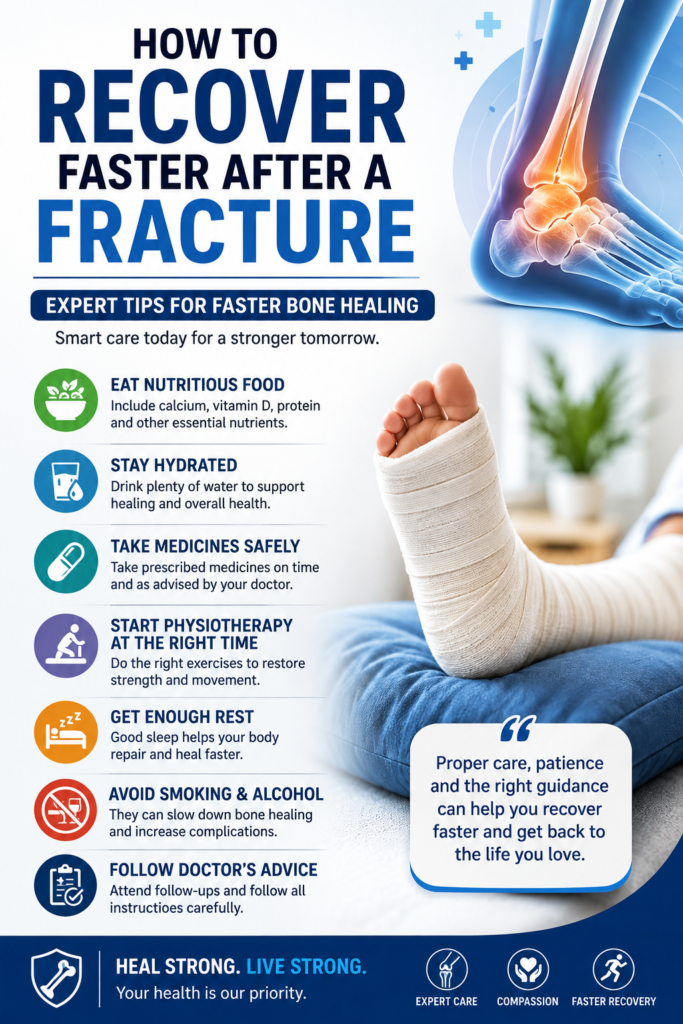
Eat Foods That Support Bone Healing
Nutrition plays a major role in recovery. Your body needs extra nutrients to repair bone and tissue. Include:
- Calcium: milk, curd, cheese, paneer, sesame seeds
- Vitamin D: sunlight, eggs, fortified foods
- Protein: dal, beans, soy, chicken, fish, nuts
- Vitamin C: oranges, lemons, amla, guava, capsicum
A balanced diet can make fracture recovery after surgery more effective by supporting stronger bone formation.
Stay Hydrated
Drinking enough water helps circulation and supports overall healing. Dehydration can increase fatigue and slow recovery. Aim for regular water intake throughout the day unless your doctor has given fluid restrictions.
Manage Pain Safely
Pain is common after fracture surgery. Take medicines exactly as prescribed. Do not stop or increase medication on your own. Applying ice packs (if allowed) and keeping the injured limb elevated can help reduce swelling and discomfort.
Start Physiotherapy at the Right Time
Physiotherapy is one of the most important steps in fracture recovery after surgery. Gentle exercises improve blood flow, reduce stiffness, and help restore muscle strength. Start only when your doctor or physiotherapist says it is safe.
Dr. Mohit Bansal emphasizes that doing exercises too early may delay healing, while delaying rehabilitation for too long can lead to stiffness and muscle weakness.
Get Enough Rest and Sleep
Your body repairs itself during sleep. Try to get 7–9 hours of quality sleep each night. Keep the injured area supported with pillows if recommended. Avoid staying awake late or overexerting yourself during the first few weeks.
Avoid Smoking and Alcohol
Smoking reduces blood supply to bones and is linked to slower fracture healing. Excessive alcohol can also interfere with bone repair and increase the risk of complications. Avoiding both can significantly improve fracture recovery after surgery.
Watch for Warning Signs
Contact your doctor if you notice:
- Increasing pain
- Excessive swelling
- Redness or pus around the surgical wound
- Fever
- Numbness or loss of movement
- A bad smell from the cast or dressing
Early treatment of complications can prevent delays in recovery.
Be Patient With the Healing Process
Every fracture heals at a different rate depending on age, overall health, the type of fracture, and the surgery performed. Some people recover within a few weeks, while others may need several months. Do not compare your progress with others.
Conclusion
Recovering from a fracture takes time, but the right approach can speed up healing and improve long-term results. Proper nutrition, rest, hydration, pain control, and physiotherapy are the key pillars of successful fracture recovery after surgery.
As Dr. Mohit Bansal explains, consistent follow-up care and patient cooperation are the keys to a smoother recovery and a quicker return to normal activities. By following your orthopedic doctor’s advice and taking care of your body, you can heal more safely and regain strength with confidence.