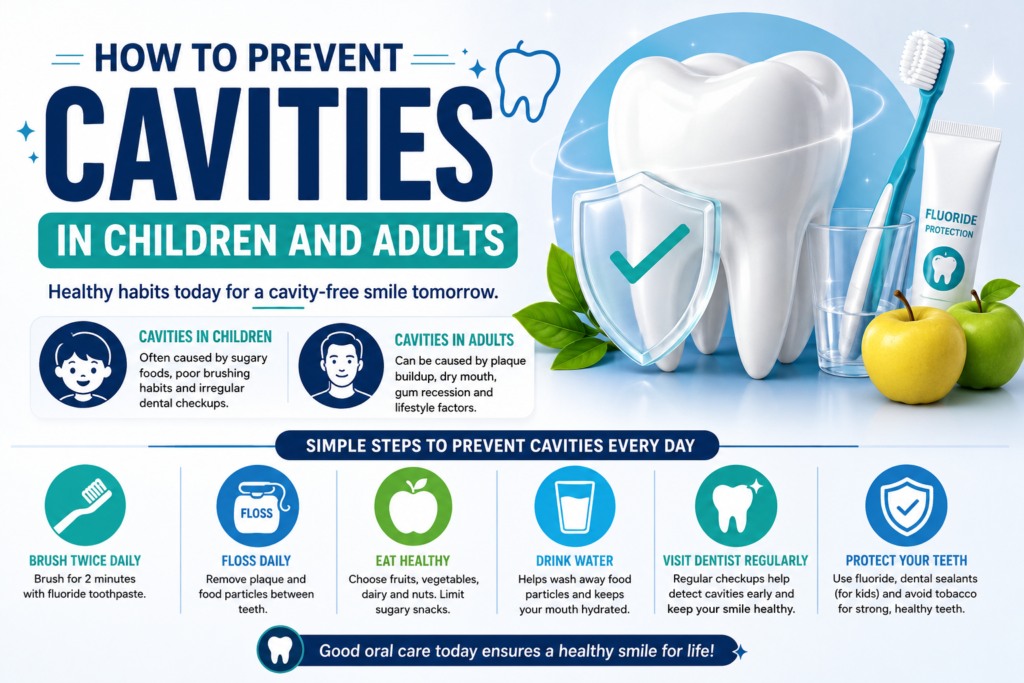
Cavities are one of the most common dental problems affecting people of all ages. While cavities in children are often linked to sugary foods and poor brushing habits, cavities in adults can develop because of plaque buildup, dry mouth, gum recession, or irregular dental visits. The good news is that cavities can usually be prevented with simple daily habits and regular professional care.
According to Dr. Pallavi Bansal, maintaining good oral hygiene from an early age is the best way to protect teeth and gums for life.
What Causes Cavities?
Cavities occur when bacteria in the mouth feed on sugars and produce acids that slowly damage the tooth enamel. If this process continues, the enamel weakens and a cavity forms. Common causes include:
- Frequent consumption of sugary snacks and drinks
- Poor brushing and flossing habits
- Not visiting the dentist regularly
- Dry mouth or reduced saliva production
- Plaque and tartar buildup
Both cavities in children and cavities in adults can lead to tooth pain, sensitivity, infection, and even tooth loss if left untreated.
How to Prevent Cavities in Children
Children are especially vulnerable because their enamel is still developing. Parents can reduce the risk by following these tips:
Brush Twice Daily
Use a fluoride toothpaste and help younger children brush for two minutes, especially before bedtime.
Limit Sugary Foods
Candies, chocolates, cookies, and sweetened drinks increase the risk of tooth decay. Offer healthier snacks such as fruits, cheese, yogurt, and nuts.
Encourage Water
Drinking water after meals helps wash away food particles and acids from the teeth.
Regular Dental Checkups
Routine dental visits allow early detection of cavities and help children become comfortable with dental care.
Dental Sealants
For some children, sealants may be recommended to protect the chewing surfaces of the back teeth.
How to Prevent Cavities in Adults
Preventing cavities in adults requires consistent oral care and attention to lifestyle factors.
Brush and Floss Daily
Brush twice a day with fluoride toothpaste and floss once daily to remove plaque between teeth.
Reduce Sugary and Acidic Drinks
Soft drinks, packaged juices, sports drinks, and frequent tea or coffee with sugar can contribute to enamel damage.
Stay Hydrated
Saliva protects teeth naturally. Drinking enough water helps prevent dry mouth and reduces cavity risk.
Avoid Tobacco
Smoking and chewing tobacco increase the risk of gum disease and dental decay.
Visit the Dentist Regularly
Professional cleaning removes tartar that cannot be removed by brushing alone.
Healthy Habits for the Whole Family
The best approach is to make cavity prevention a family routine.
- Brush for two minutes, twice a day
- Use fluoride toothpaste
- Floss every day
- Choose healthy snacks
- Drink plenty of water
- Schedule regular dental checkups
When children see adults practicing good oral hygiene, they are more likely to develop the same habits.
Early Signs You Should Not Ignore
Contact your dentist if you notice:
- Tooth sensitivity to hot, cold, or sweet foods
- White or brown spots on teeth
- Pain while chewing
- Bad breath that does not improve
- Bleeding or swollen gums
Early treatment is usually simpler, less painful, and more affordable.
Dr. Pallavi Bansal’s Advice
Dr. Pallavi Bansal emphasizes that prevention is always better than treatment. She advises parents to start dental care as soon as the first tooth appears and encourages adults not to ignore regular checkups even when there is no pain. Many cavities begin silently and are easier to treat when detected early.
Conclusion
Learning how to prevent cavities in children and adults is essential for maintaining healthy teeth and a confident smile. By combining proper brushing, flossing, healthy eating, fluoride use, and regular dental visits, families can significantly reduce the risk of tooth decay. Whether dealing with cavities in children or trying to avoid cavities in adults, small daily habits make a big difference. With guidance from experienced professionals such as Dr. Pallavi Bansal, long-term oral health becomes easier to achieve and maintain.