A healthy smile is not just about white teeth. It also depends on healthy gums and proper oral hygiene. Even if you brush and floss regularly, plaque and tartar can still build up over time. Therefore, dental scaling and polishing are essential preventive treatments that help maintain long-term oral health.
According to Dr. Pallavi Bansal, regular professional cleaning helps maintain strong teeth, healthy gums, and fresh breath while reducing the risk of future dental problems.
What Is Dental Scaling?
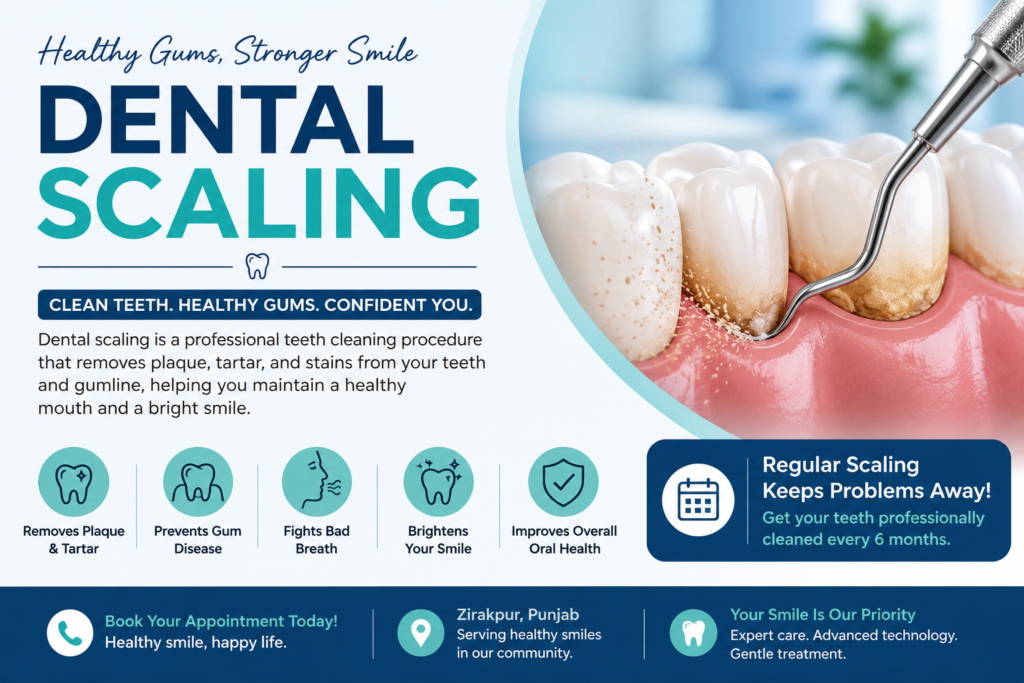
Dental scaling is a professional procedure used to remove plaque, tartar, and bacteria from the teeth and below the gum line. Tartar is hardened plaque that cannot be removed with a toothbrush alone.
During the procedure, the dentist uses ultrasonic and hand instruments to clean the teeth thoroughly and safely. As a result, scaling helps prevent gum disease and improves overall oral hygiene.
What Is Dental Polishing?
After scaling, polishing is performed to smooth the tooth surfaces and remove surface stains caused by tea, coffee, tobacco, or certain foods. This makes the teeth feel cleaner and appear brighter.
Benefits of Scaling and Polishing
- Removes plaque and tartar
- Prevents gum disease
- Reduces bad breath
- Helps prevent cavities
- Improves the appearance of teeth
- Maintains overall oral health
Dr. Pallavi Bansal recommends regular scaling and polishing as part of routine dental care, especially for people with bleeding gums, bad breath, or visible tartar buildup.
Who Should Get It Done?
You may need scaling and polishing if you:
- Have swollen or bleeding gums
- Experience persistent bad breath
- Notice yellow or brown deposits on your teeth
- Smoke or use tobacco
- Drink tea or coffee frequently
- Wear braces, crowns, or bridges
Is Scaling Painful?
For most patients, the procedure is not painful. You may feel mild vibration or sensitivity, especially if there is heavy tartar buildup. If needed, the dentist can use local anesthesia for comfort.
How Long Does It Take?
- Routine cleaning: 20–30 minutes
- Moderate buildup: 30–45 minutes
- Heavy deposits: 45–60 minutes
Does Scaling Damage Teeth?
No. Professional scaling does not damage healthy enamel. A common myth is that scaling creates gaps between teeth. In reality, tartar may have been filling spaces that were already present
How Often Should You Get It Done?
- Healthy gums: Every 6 months
- Mild tartar buildup: Every 6 months
- Gum disease: Every 3–6 months
- Smokers or heavy stain buildup: Every 4–6 months
Dr. Pallavi Bansal advises patients to follow a personalized cleaning schedule based on their gum health and oral hygiene habits.
Care After Scaling and Polishing
. Brush twice daily with fluoride toothpaste
. Floss regularly
. Avoid tobacco products
. Limit sugary foods and drinks
.Drink plenty of water
. Visit your dentist regularly
Final Thoughts
Dental scaling and polishing is one of the simplest and most effective ways to protect your teeth and gums. It removes harmful deposits, prevents gum disease, reduces bad breath, and improves the appearance of your smile.
If it has been more than six months since your last professional cleaning, consult Dr. Pallavi Bansal for a dental checkup and scaling and polishing treatment. Regular preventive care can help you maintain a healthy, confident smile for years to come.