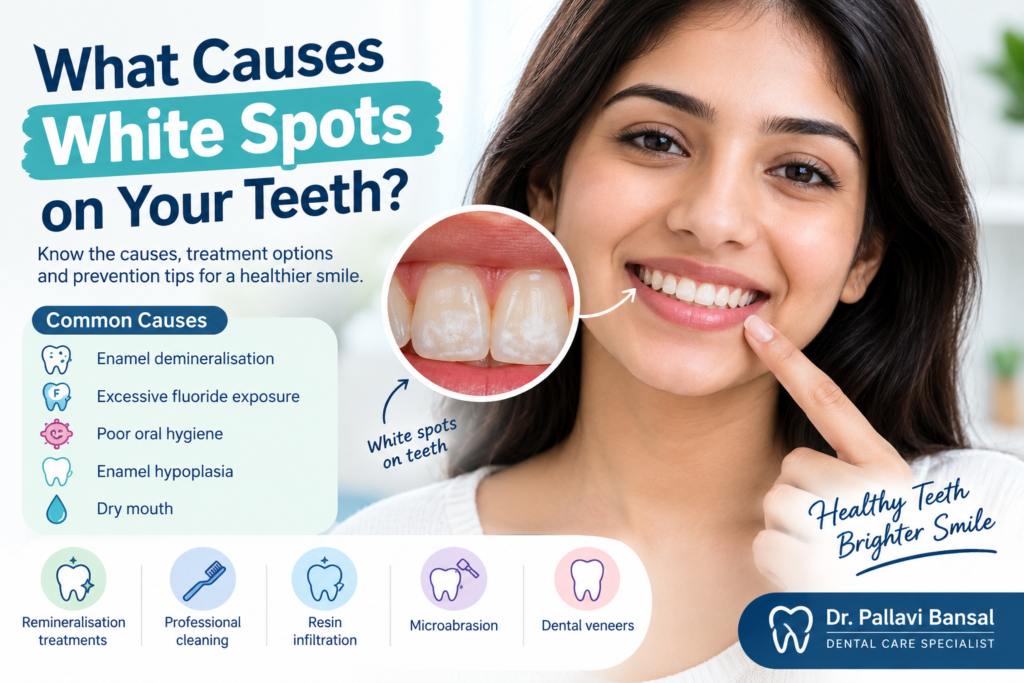
Have you ever noticed white spots or patches on your teeth while looking in the mirror? White Spots on Teeth are a common dental concern that can affect the appearance of your smile. These spots may appear as small white marks, cloudy patches, or chalky areas on the tooth surface. Although they are often harmless, they can sometimes indicate changes in tooth enamel or early tooth decay.
Understanding the causes of white spots on teeth is important for choosing the right treatment and maintaining good oral health. Dr. Pallavi Bansal recommends regular dental check-ups to identify the cause and help prevent further dental problems.
What Are White Spots on Teeth?
White spots on teeth are areas that appear lighter or more opaque than the surrounding enamel. Tooth enamel is the hard outer layer that protects your teeth. When its mineral content changes or the enamel develops differently, white patches may become visible.
These spots can develop during childhood or appear later in life. Their appearance, location, and severity often help a dentist determine the possible cause.
Common Causes of White Spots on Teeth
1. Enamel Demineralisation
One of the most common causes of white spots on teeth is enamel demineralisation. This happens when acids produced by bacteria in the mouth remove minerals from the enamel.
Frequent consumption of sugary foods and drinks, along with inadequate oral hygiene, can increase the risk. White spots may be an early warning sign of tooth decay, even before a cavity develops. Early dental care can help manage the problem and prevent further damage.
2. Excessive Fluoride Exposure
Fluoride helps strengthen tooth enamel and protect against cavities. However, excessive fluoride exposure while teeth are developing can lead to dental fluorosis.
Dental fluorosis may cause white lines, streaks, or cloudy patches on the teeth. Mild cases usually affect appearance without causing pain. A dentist can assess the condition and recommend suitable cosmetic options if needed.
3. Poor Oral Hygiene
Inadequate brushing and flossing can allow plaque to accumulate on the teeth. Bacteria in plaque produce acids that weaken enamel and may lead to white spots.
People wearing braces may be more likely to develop these marks around brackets because plaque can collect in difficult-to-clean areas. Maintaining a consistent oral hygiene routine is essential for preventing enamel damage.
4. Enamel Hypoplasia
Enamel hypoplasia is a condition in which the enamel does not develop properly. It may result in thin enamel, pits, grooves, or white and yellowish patches.
This condition can develop before the teeth erupt and may be associated with childhood illness, nutritional problems, or other developmental factors. A dental professional can determine whether the affected teeth need protective or cosmetic treatment.
5. Dry Mouth
Saliva helps wash away food particles, neutralise acids, and protect tooth enamel. When the mouth becomes dry, teeth may lose some of this natural protection.
Temporary dryness can also make white areas appear more noticeable. Drinking water regularly and discussing persistent dry mouth with a healthcare professional can help address the underlying cause.
How Can White Spots on Teeth Be Treated?
Treatment depends on the cause, the condition of the enamel, and the appearance of the spots. A dentist may recommend one or more of the following options:
- Remineralisation treatments: Fluoride products or other dentist-recommended treatments may help strengthen weakened enamel.
- Professional cleaning: Removing plaque and deposits may improve the appearance of some surface marks.
- Resin infiltration: A specialised resin may help reduce the visibility of certain white spots.
- Microabrasion: A dentist may carefully remove a very thin surface layer of enamel in selected cases.
- Dental veneers: For suitable patients with persistent cosmetic concerns, veneers may cover visible discolouration.
Not every white spot requires cosmetic treatment. A dental examination is necessary to identify the cause and select the safest approach. Avoid using harsh whitening products or home remedies without professional advice.
How to Prevent White Spots on Teeth
You can reduce the risk of developing white spots by following these simple habits:
- Brush twice daily with fluoride toothpaste.
- Clean between your teeth every day using floss or an appropriate interdental cleaner.
- Limit frequent sugary snacks and acidic drinks.
- Drink enough water to help maintain a healthy mouth.
- Follow your dentist’s advice about fluoride use, especially for children.
- Schedule regular dental check-ups and professional cleanings.
If you wear braces, pay particular attention to cleaning around brackets and wires.
When Should You Visit a Dentist?
You should consult a dentist if white spots appear suddenly, become more noticeable, feel rough, or occur alongside sensitivity or pain. Early evaluation can help determine whether the marks are cosmetic or signs of enamel damage.
Dr. Pallavi Bansal can assess your teeth, explain the possible causes, and recommend appropriate preventive or treatment options based on your dental needs.
Conclusion
White Spots on Teeth can develop because of enamel demineralisation, excessive fluoride exposure during tooth development, poor oral hygiene, enamel hypoplasia, or dry mouth. While some spots are harmless, others may indicate early enamel damage that needs attention.
Maintaining good oral hygiene and visiting your dentist regularly can help protect your smile. If you notice unusual white patches, consult a dental professional for an accurate diagnosis and personalised care.