Tooth extraction is a common dental procedure performed when a tooth is severely damaged, infected, decayed, or causing other dental problems. Although the procedure is generally straightforward, proper care after extraction is important for comfortable healing. Understanding Tooth Extraction Recovery can help you know what to expect and how to take care of your mouth during the healing process.
Dr. Pallavi Bansal emphasizes the importance of following proper post-extraction instructions to support healing and reduce the risk of complications.
What Happens After Tooth Extraction?
After a tooth is removed, a blood clot naturally forms in the empty tooth socket. This clot protects the underlying bone and tissues while healing begins.
You may experience some common symptoms, including:
- Mild pain or discomfort around the extraction area.
- Swelling in the gums or cheek.
- Slight bleeding during the first few hours.
- Difficulty chewing near the affected area.
- Temporary jaw stiffness.
These symptoms are generally part of the normal healing process and should gradually improve.
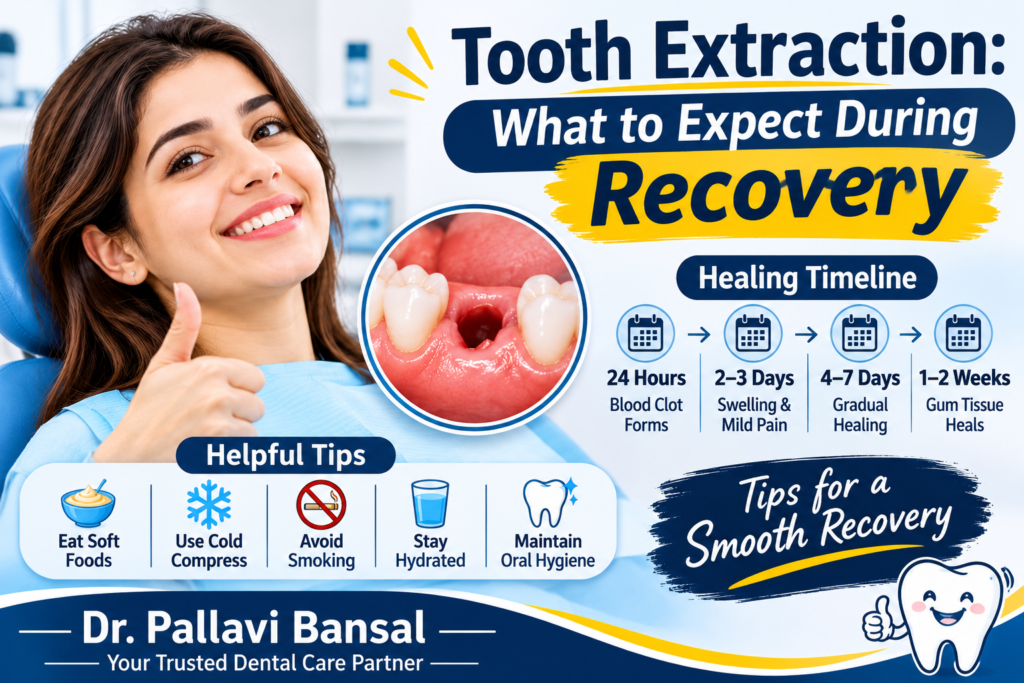
Tooth Extraction Recovery: Healing Timeline
Recovery time depends on the type of extraction, your overall oral health, and how well you follow aftercare instructions.
First 24 Hours
The first day is important for healing. A blood clot develops in the extraction socket. Avoid disturbing the area and follow your dentist’s instructions carefully.
Second and Third Day
Some swelling and discomfort may continue during this period. Rest, eat soft foods, and avoid activities that may disturb the extraction site.
Fourth to Seventh Day
Most people notice gradual improvement in pain and swelling. The gum tissue starts healing around the extraction area.
After One to Two Weeks
The gum tissue generally continues closing and healing. However, complete healing of the underlying bone can take several weeks or longer.
Important Tips for Faster Tooth Extraction Recovery
Following proper aftercare can make your recovery more comfortable.
Here are some useful tips:
- Follow Dentist’s Instructions: Always follow the aftercare guidance provided by your dentist.
- Eat Soft Foods: Choose foods such as yogurt, mashed potatoes, soup (not hot), and soft rice.
- Maintain Oral Hygiene: Brush your teeth gently and avoid disturbing the extraction site.
- Avoid Smoking: Smoking can interfere with healing and increase the risk of complications.
- Get Enough Rest: Avoid strenuous physical activities during the initial recovery period.
- Stay Hydrated: Drink enough water, but avoid using a straw during the initial healing period.
Foods to Eat After Tooth Extraction
Your food choices can help make recovery easier. During the first few days, choose soft foods that require minimal chewing.
Recommended foods include:
- Yogurt
- Mashed potatoes
- Soft scrambled eggs
- Oatmeal
- Smooth soups served lukewarm
- Mashed bananas
- Soft-cooked vegetables
Avoid hard, crunchy, spicy, and very hot foods until your dentist says it is safe.
What Should You Avoid After Tooth Extraction?
Certain habits can disturb the healing process and increase the risk of complications.
Avoid:
- Drinking through a straw.
- Smoking or using tobacco.
- Eating hard or crunchy foods.
- Touching the extraction site with your fingers or tongue.
- Vigorous rinsing or spitting during the first 24 hours.
- Heavy exercise immediately after the procedure.
Following these precautions can help protect the blood clot and support proper healing.
When Should You Contact Your Dentist?
Although some discomfort is normal, certain symptoms require professional attention. Contact your dentist if you experience:
- Severe or worsening pain.
- Bleeding that does not stop with the recommended pressure.
- Increasing swelling after the initial recovery period.
- Fever or signs of infection.
- An unpleasant taste or discharge from the extraction area.
Early dental evaluation can help identify and manage possible complications.
Why Choose Dr. Pallavi Bansal for Dental Care?
Dr. Pallavi Bansal focuses on providing patient-friendly dental care and guidance. From understanding the need for tooth extraction to explaining recovery and aftercare, professional dental advice plays an important role in maintaining oral health.
Every patient may have different recovery needs, so following personalized dental instructions is essential.
Conclusion
Proper Tooth Extraction Recovery requires patience, good oral hygiene, and appropriate aftercare. Eating soft foods, avoiding smoking, protecting the extraction site, and following your dentist’s instructions can support a smooth healing process.
If you have questions about tooth extraction or experience unusual symptoms during recovery, consult Dr. Pallavi Bansal for professional dental guidance.