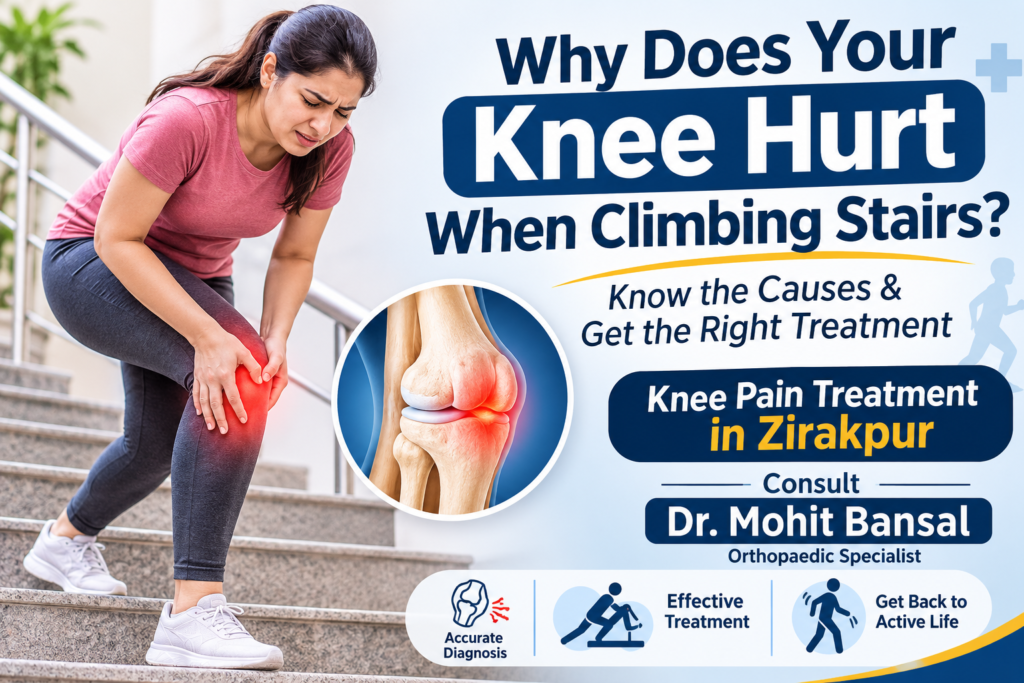
Do you experience knee pain while climbing stairs or walking upstairs? Knee pain is a common problem that can affect people of different age groups. If you are looking for Knee Pain Treatment in Zirakpur, understanding the possible causes is an important first step. Activities such as climbing stairs, sitting for long periods, standing up, or walking downhill may become uncomfortable when your knee joint is not functioning properly.
Understanding why your knee hurts when climbing stairs is important for identifying the possible cause and getting appropriate treatment. Knee pain may develop due to cartilage problems, muscle weakness, injuries, or age-related joint conditions. With proper diagnosis and timely care, many people can manage their symptoms and improve their mobility.
Common Causes of Knee Pain When Climbing Stairs
Several conditions can cause knee pain during stair climbing. Some of the most common causes include:
1. Patellofemoral Pain Syndrome
Patellofemoral pain syndrome occurs when the area around or behind the kneecap becomes painful. It is commonly associated with activities that put pressure on the knee, such as climbing stairs, squatting, running, or jumping.
2. Knee Osteoarthritis
Osteoarthritis is a condition in which the protective cartilage inside the knee gradually wears down. It may cause pain, stiffness, swelling, and difficulty performing everyday activities. Symptoms can become more noticeable when climbing stairs or standing for long periods.
3. Muscle Weakness
Weak thigh and hip muscles may affect knee stability and movement. When these muscles do not provide enough support, additional stress may develop around the knee joint, leading to discomfort during stair climbing.
4. Meniscus Injury
The meniscus is a piece of cartilage that helps cushion the knee joint. A meniscus injury may occur due to twisting movements, sports activities, or age-related changes. It can cause pain, swelling, stiffness, and difficulty bending the knee.
5. Tendon Problems
Inflammation or irritation of the tendons around the kneecap may cause pain during movements that involve bending and straightening the knee. This discomfort can become noticeable while climbing stairs or exercising.
Symptoms You Should Not Ignore
Knee pain may appear gradually or develop after an injury. Some common symptoms include:
- Pain while climbing or descending stairs.
- Stiffness after sitting for a long time.
- Swelling around the knee joint.
- Clicking or popping sounds with discomfort.
- Difficulty bending or straightening the knee.
- A feeling of weakness or instability.
If knee pain continues or affects your daily activities, consider consulting an orthopaedic specialist for proper evaluation.
How Is Knee Pain Diagnosed?
Finding the exact cause of knee pain is important before starting treatment. An orthopaedic specialist may recommend:
Physical Examination: Checking knee movement, swelling, tenderness, and stability.Medical History: Understanding previous injuries, lifestyle, and symptoms.
X-ray: Evaluating bone structure and possible signs of osteoarthritis.MRI Scan: Examining soft tissues, ligaments, cartilage, and meniscus when required.
The diagnosis helps determine the most suitable treatment approach.Knee Pain Treatment in Zirakpur
People experiencing knee discomfort should seek professional advice rather than ignoring persistent symptoms. Knee Pain Treatment in Zirakpur may involve different approaches depending on the underlying condition and severity.
Some commonly recommended treatment options include:
- Medication: A doctor may recommend suitable medicines to manage pain and inflammation.
- Physiotherapy: Guided exercises can help improve flexibility, muscle strength, and knee movement.
- Lifestyle Modifications: Maintaining healthy activity levels and avoiding movements that worsen pain may help reduce stress on the knee.
- Supportive Devices: Knee supports or braces may be recommended in certain conditions.
- Advanced Treatment: Depending on the diagnosis, specialised procedures or surgical options may be considered.
Treatment should always be personalised according to the patient’s condition.
Tips to Reduce Knee Pain While Climbing Stairs
You can follow these simple precautions to support better knee health:
- Avoid rushing while climbing stairs.
- Use handrails for additional support.
- Wear comfortable and supportive footwear.
- Avoid excessive pressure on a painful knee.
- Follow doctor-recommended strengthening exercises.
- Take breaks when your knees feel uncomfortable.
- Maintain regular, low-impact physical activity as advised by your doctor.
If you experience sudden severe pain, significant swelling, or difficulty putting weight on your leg, seek prompt medical evaluation.
Consult Dr. Mohit Bansal for Knee Pain
If climbing stairs has become uncomfortable because of knee pain, getting the right medical advice can make a difference. Dr. Mohit Bansal can help evaluate knee-related concerns, identify possible causes, and guide patients towards suitable treatment options.
Whether your discomfort is related to osteoarthritis, cartilage problems, muscle weakness, or an injury, an accurate diagnosis is an important step towards better joint health.
For people looking for Knee Pain Treatment in Zirakpur, consulting an orthopaedic specialist can help you understand your condition and explore appropriate treatment options.
Conclusion
Knee pain when climbing stairs should not be ignored, especially when it becomes frequent or starts affecting everyday activities. Conditions such as patellofemoral pain syndrome, osteoarthritis, meniscus injuries, and muscle weakness may contribute to the problem.
Early evaluation, appropriate treatment, and healthy lifestyle habits can help improve knee function and mobility. Consult Dr. Mohit Bansal for professional guidance regarding knee pain and suitable treatment options.