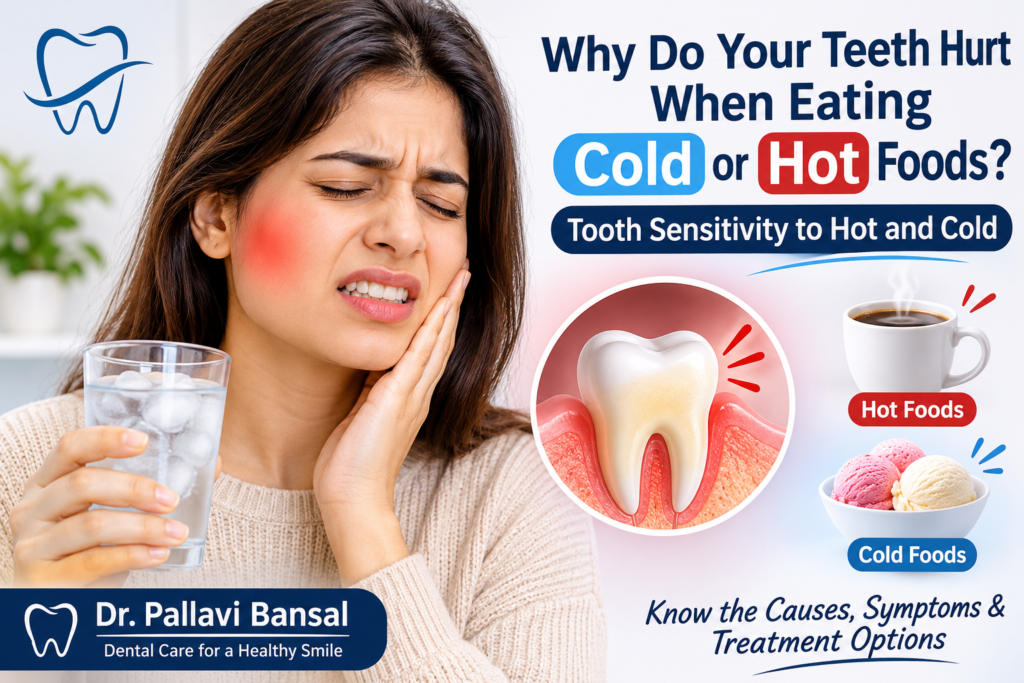
Have you ever experienced a sudden sharp pain in your teeth while drinking cold water, enjoying ice cream, or sipping hot tea? This problem is commonly known as tooth sensitivity. Tooth Sensitivity to Hot and Cold is a common dental concern that can affect your comfort while eating and drinking. Understanding its causes and treatment options can help you maintain better oral health.
What Is Tooth Sensitivity?
Tooth sensitivity occurs when the protective enamel becomes weak or the underlying dentin gets exposed. Dentin contains tiny channels that connect to the nerves inside the tooth. When hot, cold, sweet, or acidic foods come into contact with exposed dentin, they may trigger temporary pain or discomfort.
Common Causes of Tooth Sensitivity to Hot and Cold
Several factors can contribute to sensitive teeth:
1. Worn Tooth Enamel: Brushing too hard or using abrasive toothpaste can gradually wear down tooth enamel, making teeth more sensitive.
2. Gum Recession: When gums move away from the teeth, the roots become exposed. Since tooth roots do not have protective enamel, they can be sensitive to temperature changes.
3. Tooth Decay: Cavities can expose the inner layers of teeth and cause discomfort when consuming hot or cold foods.
4. Cracked Teeth: Small cracks in teeth may allow temperature changes to affect sensitive inner areas, causing pain.
5. Teeth Grinding: Regular teeth grinding can wear down enamel and increase dental sensitivity.
6. Recent Dental Procedures: Some people experience temporary sensitivity after dental treatments such as teeth whitening, fillings, or professional cleaning.
Symptoms of Sensitive Teeth
Common signs of tooth sensitivity include:
- Sharp pain while eating ice cream or drinking cold water.
- Discomfort when consuming hot beverages.
- Pain when eating sweet or acidic foods.
- Sudden sensitivity while brushing or flossing.
- Temporary tooth pain triggered by temperature changes.
If the pain is persistent, severe, or affects only one tooth, a dental examination is important.
How Can Tooth Sensitivity Be Treated?
The treatment depends on the underlying cause. Your dentist may recommend:
- Desensitizing Toothpaste: Special toothpaste can help reduce sensitivity over time.
- Fluoride Treatment: Fluoride helps strengthen enamel and protect exposed areas.
- Dental Fillings: Cavities and damaged areas may require restorative treatment.
- Gum Treatment: Gum-related problems may need appropriate dental care.
- Dental Crowns: Damaged or weakened teeth may require additional protection.
Avoiding extremely hot or cold foods temporarily and using a soft-bristled toothbrush may also help reduce discomfort.
Tips to Prevent Tooth Sensitivity
Follow these simple oral care habits:
- Brush twice daily with a soft-bristled toothbrush.
- Use fluoride toothpaste recommended by your dentist.
- Avoid brushing too aggressively.
- Limit acidic foods and sugary drinks.
- Maintain regular dental check-ups.
- Do not ignore recurring tooth pain.
When Should You Visit a Dentist?
If you frequently experience Tooth Sensitivity to Hot and Cold, do not ignore the discomfort. Persistent sensitivity may indicate cavities, enamel damage, gum recession, or other dental concerns. Early diagnosis can help prevent further complications.
Consult Dr. Pallavi Bansal for Dental Care
If hot or cold foods are causing discomfort, consult Dr. Pallavi Bansal for a proper dental examination and guidance. Identifying the actual cause of tooth sensitivity is the first step towards choosing the right treatment.