Teeth whitening is one of the most popular cosmetic dental procedures today, helping patients achieve a brighter and more confident smile. If you’re considering teeth whitening tooth care clinic in zirakpur, it’s important to understand one common side effect – tooth sensitivity after whitening. Many patients experience temporary discomfort after the procedure, but the good news is that it’s manageable and usually short-lived. In this blog, we’ll explore why sensitivity happens, how long it lasts, and what you can do to prevent and treat it effectively.
🦷 What Is Tooth Sensitivity After Whitening?
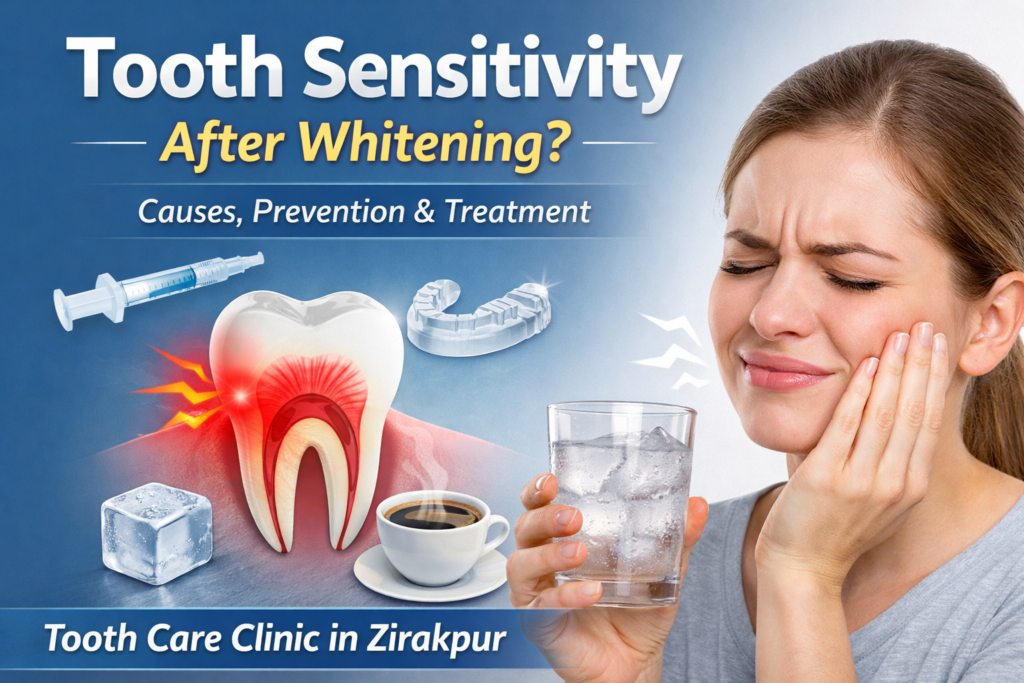
Tooth sensitivity after whitening refers to a sharp, temporary discomfort or pain in the teeth when exposed to hot, cold, sweet, or acidic foods and drinks. This sensitivity usually occurs after professional whitening treatments or even at-home whitening kits.
It’s a very common condition and does not indicate permanent damage to your teeth. However, understanding its cause can help you reduce the discomfort and make better decisions before undergoing treatment.
⚡ Why Does Tooth Sensitivity Happen After Whitening?
Teeth whitening products contain active ingredients like hydrogen peroxide or carbamide peroxide. These chemicals penetrate the enamel to break down stains inside the tooth. Consult with one of the best dentist in the tooth care clinic in zirakpur to understand
what happens:
- The whitening agents temporarily open the pores in the enamel
- This allows the bleaching agent to reach the dentin layer
- The dentin contains microscopic tubules that lead to the nerve
- When exposed, these tubules make teeth more sensitive
This process is essential for whitening but can lead to temporary discomfort.
⏳ How Long Does Sensitivity Last?
In most cases, tooth sensitivity after whitening lasts:
- 24 to 48 hours for mild cases
- Up to 3–5 days in moderate cases
- Rarely longer if teeth are already sensitive
If sensitivity persists beyond a week, it’s best to consult a dentist, especially at a trusted clinic in Zirakpur.
🚨 Who Is More Likely to Experience Sensitivity?
Not everyone experiences sensitivity, but some people are more prone to it:
- People with naturally sensitive teeth
- Patients with thin enamel
- Those with gum recession
- Individuals with untreated cavities or cracks
- Frequent users of whitening products
If you fall into any of these categories, consult a dental expert before undergoing whitening.
🛑 Common Mistakes That Increase Sensitivity
Many patients unknowingly worsen sensitivity by making these mistakes:
- Overusing whitening products
- Using high-concentration bleaching agents at home
- Not following dentist instructions
- Whitening too frequently
- Ignoring pre-existing dental issues
Avoiding these mistakes can significantly reduce post-whitening discomfort.
✅ How to Prevent Tooth Sensitivity After Whitening
Prevention is always better than cure. Here are some proven tips:
1. Choose Professional Whitening
Getting your treatment done at a certified dental clinic ensures controlled application and safer results.
2. Use Desensitizing Toothpaste
Start using toothpaste containing potassium nitrate at least 1–2 weeks before whitening.
3. Avoid Extremely Hot or Cold Foods
Before and after whitening, avoid triggering foods and beverages.
4. Follow Recommended Duration
Do not exceed the recommended whitening time or frequency.
5. Treat Dental Issues First
Fix cavities, gum problems, or cracks before undergoing whitening.
🏥 Treatment Options for Sensitivity
If you experience sensitivity after whitening, don’t worry—it’s manageable.
🪥 1. Desensitizing Toothpaste
Use toothpaste designed for sensitive teeth. It helps block nerve signals and reduces discomfort.
💊 2. Fluoride Treatment
Dentists may apply fluoride gel to strengthen enamel and reduce sensitivity.
🧴 3. Desensitizing Gels
These are applied directly to teeth to soothe nerve endings.
🥛 4. Avoid Trigger Foods
Stay away from:
- Ice-cold drinks
- Hot beverages
- Sugary foods
- Acidic fruits
⏸️ 5. Take a Break from Whitening
If you’re using home kits, pause the treatment for a few days.
🍽️ What to Eat After Teeth Whitening
Your diet plays a big role in recovery. Follow the “white diet” for at least 48 hours:
Recommended Foods:
- Milk and dairy products
- Rice and plain pasta
- Bananas
- Boiled vegetables
- White bread
Avoid:
- Coffee and tea
- Red wine
- Cola
- Tomato-based sauces
- Spicy foods
🧠 Is Tooth Sensitivity Permanent?
No, tooth sensitivity after whitening is temporary in most cases. It occurs because of the whitening process but subsides as the enamel pores close naturally.
However, if sensitivity is severe or long-lasting, it may indicate an underlying issue that needs professional attention.
🌟 Benefits of Professional Teeth Whitening
Despite temporary sensitivity, professional whitening offers many advantages:
- Faster and more effective results
- Safe and controlled procedure
- Customized treatment based on your teeth
- Reduced risk of damage
- Long-lasting brightness
Choosing a reputed clinic ensures both safety and comfort.