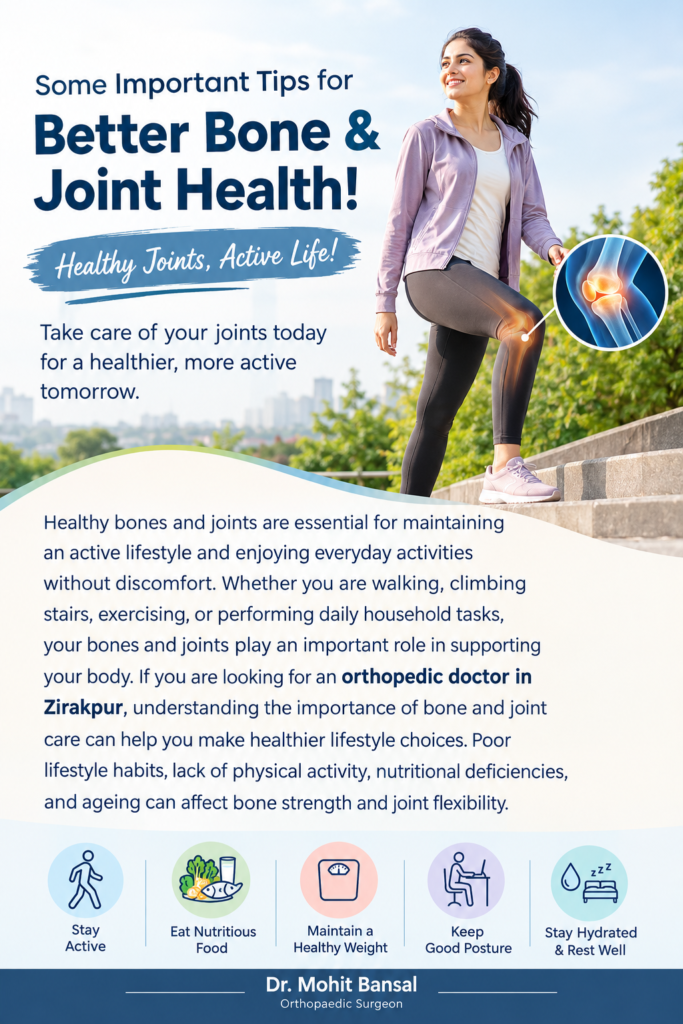
Healthy bones and joints are essential for maintaining an active lifestyle and enjoying everyday activities without discomfort. Whether you are walking, climbing stairs, exercising, or performing daily household tasks, your bones and joints play an important role in supporting your body. If you are looking for an orthopedic doctor in Zirakpur, understanding the importance of bone and joint care can help you make healthier lifestyle choices. Poor lifestyle habits, lack of physical activity, nutritional deficiencies, and ageing can affect bone strength and joint flexibility.
Following simple daily habits can help support better bone and joint health and reduce the risk of certain musculoskeletal problems. Dr. Mohit Bansal, Orthopedic Surgeon, shares some important tips to help you take care of your bones and joints for a healthier, more active future.
1. Maintain a Balanced and Nutritious Diet
A healthy diet is essential for strong bones and healthy joints. Include calcium-rich foods such as milk, yoghurt, cheese, and leafy green vegetables in your daily meals. Calcium helps maintain bone strength, while vitamin D supports calcium absorption.
Foods such as eggs, fatty fish, nuts, seeds, and fortified products can also contribute to a balanced diet. Ensure that your meals contain adequate protein to support muscle strength, as strong muscles help support and protect your joints.
2. Stay Physically Active
Regular physical activity helps maintain joint flexibility, muscle strength, balance, and overall mobility. Activities such as walking, cycling, swimming, and gentle stretching can support better joint function.
Weight-bearing exercises, including walking and suitable strength-training activities, can also help maintain bone health. Choose exercises according to your age, fitness level, and medical condition. If you experience persistent joint pain, consult an orthopedic specialist before starting a new exercise routine.
3. Maintain a Healthy Body Weight
Excess body weight can place additional pressure on weight-bearing joints, particularly the knees, hips, and ankles. Over time, this extra stress may contribute to joint discomfort and mobility difficulties.
Maintaining a healthy weight through balanced nutrition and regular physical activity can help reduce unnecessary pressure on your joints. Small, consistent lifestyle changes can make a meaningful difference to your overall musculoskeletal health.
4. Maintain Proper Posture
Poor posture while sitting, standing, or working can place unnecessary stress on your neck, back, and other joints. If you spend long hours at a desk, keep your back supported, position your screen at eye level, and take regular movement breaks.
Avoid sitting in the same position for extended periods. When lifting heavy objects, bend your knees, keep the object close to your body, and avoid twisting your back suddenly. These habits can help reduce strain and support better movement.
5. Stay Hydrated and Get Enough Rest
Drinking enough water throughout the day supports normal body functions and helps maintain overall health. Adequate sleep is equally important because it allows your body to recover from daily physical activities.
Try to maintain a consistent sleep schedule and give your body enough time to rest after exercise. Avoid overtraining, especially if you are experiencing muscle soreness or joint discomfort.
6. Do Not Ignore Persistent Joint Pain
Occasional muscle soreness after physical activity may improve with rest. However, persistent pain, swelling, stiffness, reduced movement, or difficulty walking should not be ignored.
Early medical evaluation can help identify the cause of these symptoms and guide appropriate treatment. Avoid self-medicating or continuing activities that worsen your pain.
If you are searching for an orthopedic doctor in Zirakpur, consulting an experienced orthopedic specialist like Dr. Mohit Bansal can help you understand your symptoms and explore suitable treatment options.
Conclusion
Taking care of your bones and joints starts with simple daily habits. A balanced diet, regular exercise, healthy body weight, proper posture, sufficient rest, and timely medical attention can help support long-term mobility and overall well-being.
Follow these practical tips shared by Dr. Mohit Bansal, Orthopaedic Surgeon, to make bone and joint health a priority. If you experience ongoing joint pain or movement difficulties, seek professional guidance and take the first step towards a healthier, more active lifestyle.