Tooth sensitivity is a common dental problem that can make everyday activities like eating, drinking, or brushing uncomfortable. You may notice a sudden sharp sensation when consuming hot, cold, sweet, or acidic foods and drinks.
Understanding the causes of sensitive teeth can help you take the right steps toward better oral health. If sensitivity continues or becomes severe, consulting a dentist such as Dr. Pallavi Bansal can help identify the underlying cause and recommend appropriate treatment.
What Causes Tooth Sensitivity? — Learn How to Treat Sensitive Teeth
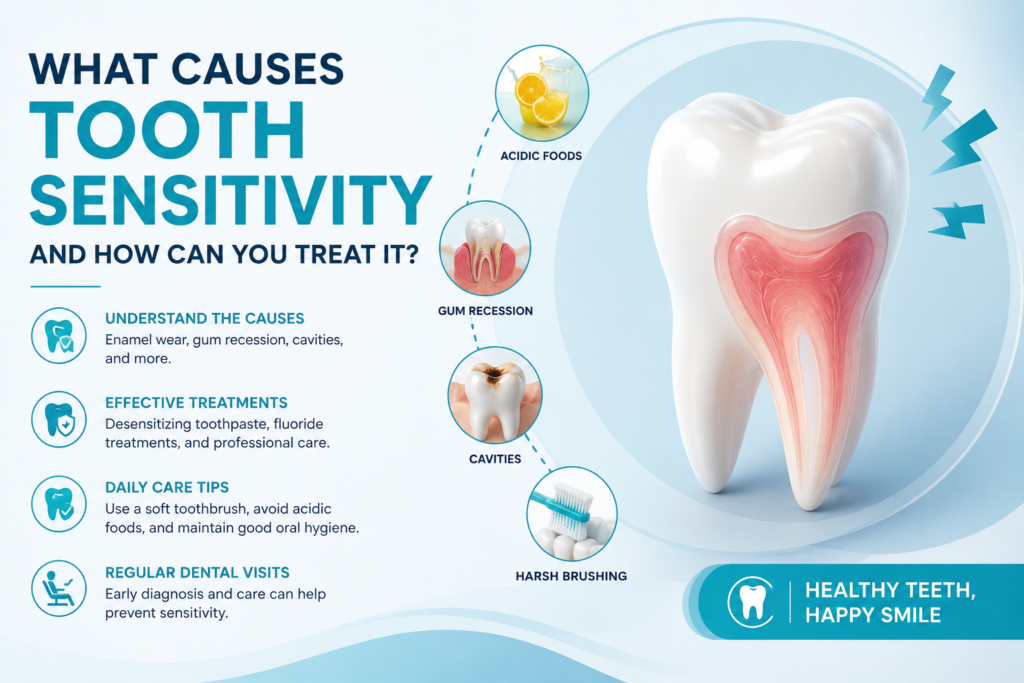
Tooth sensitivity usually occurs when the protective enamel of a tooth becomes worn down or when the gums recede. This can expose the underlying dentin, which contains tiny channels connected to the nerves inside the tooth. When hot, cold, sweet, or acidic substances reach these areas, they can trigger a sharp sensation.
Common causes of tooth sensitivity include:
1. Enamel Erosion
Frequent consumption of acidic foods and drinks, such as soft drinks and citrus fruits, can gradually weaken tooth enamel. Brushing too aggressively can also contribute to enamel wear.
2. Gum Recession
Gums can recede because of gum disease, aggressive brushing, or other dental issues. When the root surface becomes exposed, teeth may become more sensitive because roots do not have the same protective enamel layer.
3. Cavities and Tooth Damage
Tooth decay, cracks, or damaged fillings can expose sensitive areas of a tooth. Sensitivity caused by these problems may require professional dental treatment.
4. Teeth Grinding
Grinding or clenching your teeth can gradually wear down the enamel. Over time, this may increase sensitivity and make teeth more vulnerable to other dental problems.
5. Recent Dental Treatments
Some people experience temporary sensitivity after procedures such as professional teeth whitening, fillings, or other dental treatments. This often improves with time, but persistent sensitivity should be checked by a dentist.
How to Treat Sensitive Teeth
If you are wondering How to Treat Sensitive Teeth, the right approach depends on the cause. Simple changes in your daily oral-care routine may help mild sensitivity, while persistent symptoms may require professional treatment.
Use a Soft-Bristled Toothbrush
Brush gently twice a day with a soft-bristled toothbrush. Avoid applying excessive pressure, as aggressive brushing can contribute to enamel wear and gum recession.
Try Desensitizing Toothpaste
Toothpaste formulated for sensitive teeth may help reduce sensitivity when used regularly. Give it some time to work and follow the directions on the product.
Limit Acidic Foods and Drinks
Reducing frequent exposure to acidic foods and beverages can help protect your enamel. If you consume acidic drinks, avoid holding them in your mouth for long periods.
Maintain Good Oral Hygiene
Regular brushing and flossing can help prevent cavities and gum disease, both of which can contribute to tooth sensitivity. Routine dental check-ups are also important for detecting problems early.
Get Professional Dental Treatment
If sensitivity is caused by cavities, gum disease, damaged teeth, enamel wear, or another dental condition, a dentist can recommend treatment based on the underlying problem. Dr. Pallavi Bansal can evaluate your symptoms and guide you toward an appropriate treatment plan.
When Should You See a Dentist?
Occasional sensitivity may not always indicate a serious problem, but persistent, worsening, or severe sensitivity should not be ignored. You should consider visiting a dentist if the discomfort continues, affects your daily activities, or occurs along with toothache, swelling, bleeding gums, or visible tooth damage.
Conclusion
Tooth sensitivity can have several causes, including enamel erosion, gum recession, cavities, tooth damage, and teeth grinding. Maintaining good oral hygiene, using a soft toothbrush, limiting acidic foods, and using suitable dental products can help manage mild sensitivity. However, identifying the underlying cause is important for long-term relief.
If you are experiencing ongoing sensitivity and want to know How to Treat Sensitive Teeth, consult Dr. Pallavi Bansal for a professional dental evaluation and personalized advice.