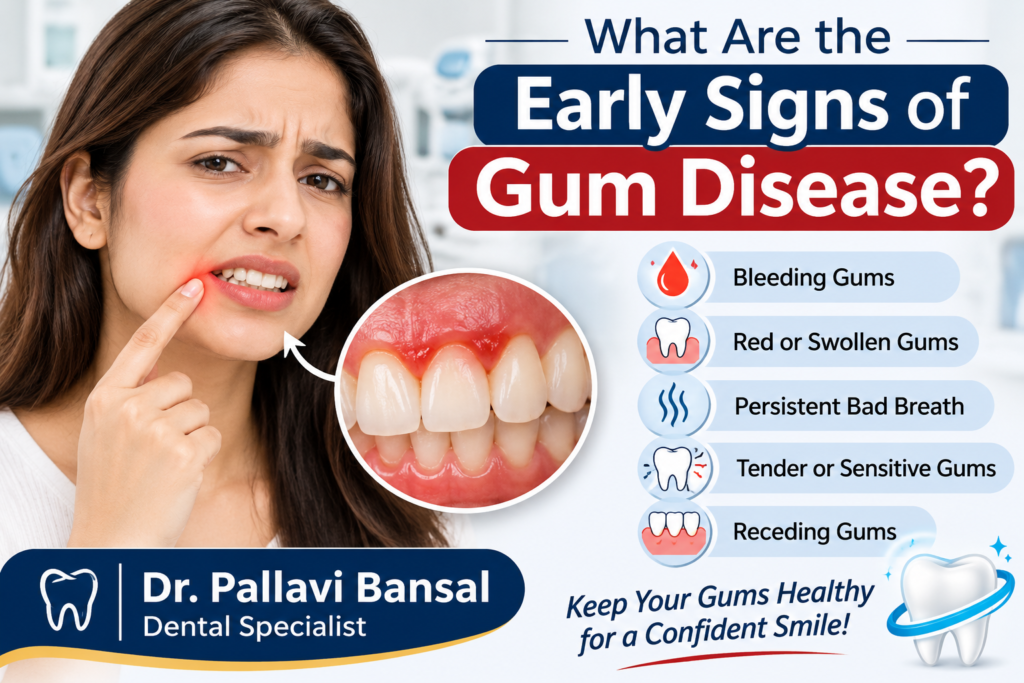
Healthy gums are essential for maintaining strong teeth and good oral health. However, many people ignore early gum problems because they may not cause pain initially. Understanding the Early Signs of Gum Disease can help you identify potential problems and seek timely dental care before the condition becomes more serious.
Gum disease, also known as periodontal disease, is a common oral health condition caused by the buildup of plaque and bacteria around the teeth and gums. If left untreated, it can damage the tissues supporting your teeth and may eventually lead to tooth loss.
1. Bleeding Gums While Brushing or Flossing
One of the most common early signs of gum disease is bleeding gums. If you notice blood while brushing or flossing, it may indicate gum inflammation. Healthy gums generally should not bleed during regular oral hygiene.
2. Red or Swollen Gums
Healthy gums usually appear firm and pink. Red, swollen, or tender gums may indicate inflammation caused by plaque buildup. This condition can be an early stage of gum disease called gingivitis.
3. Persistent Bad Breath
Bad breath that does not disappear even after brushing may be related to bacteria accumulating around the gums and teeth. Persistent unpleasant breath can sometimes indicate an underlying gum problem.
4. Tender or Sensitive Gums
If your gums feel uncomfortable, painful, or sensitive while eating or brushing, it may be a sign of irritation or inflammation. Do not ignore persistent gum discomfort.
5. Receding Gums
Gum recession occurs when the gum tissue gradually pulls away from the teeth, making the teeth appear longer. It can expose the roots and increase sensitivity. Gum recession should be evaluated by a dental professional.
6. Changes in Your Bite
In more advanced gum disease, the supporting tissues around the teeth may become damaged. You might notice changes in how your teeth fit together or experience loose teeth. These symptoms require prompt dental evaluation.
What Causes Gum Disease?
Several factors can increase the risk of gum disease, including:
- Poor oral hygiene and plaque buildup
- Inconsistent brushing and flossing
- Smoking or tobacco use
- Diabetes and certain health conditions
- Hormonal changes
- Irregular dental checkups
How Can You Prevent Gum Disease?
Maintaining good oral hygiene is important for preventing gum problems. Follow these simple habits:
- Brush your teeth twice daily using a soft-bristled toothbrush.
- Floss regularly to remove plaque between teeth.
- Use a dentist-recommended mouthwash if needed.
- Avoid smoking and tobacco products.
- Limit sugary foods and drinks.
- Visit your dentist regularly for professional checkups and cleaning.
When Should You Visit a Dentist?
If you experience bleeding gums, persistent bad breath, swelling, gum recession, or loose teeth, consult a dentist. Early diagnosis and treatment can help prevent gum disease from progressing.
Conclusion
Recognising the Early Signs of Gum Disease is important for protecting your teeth and gums. Symptoms such as bleeding, redness, swelling, bad breath, and gum tenderness should never be ignored. With proper oral hygiene and timely dental care, gum disease can often be managed effectively.
For professional dental guidance and gum health evaluation, consult Dr. Pallavi Bansal. Regular dental visits and preventive care can help you maintain healthy gums and a confident smile.