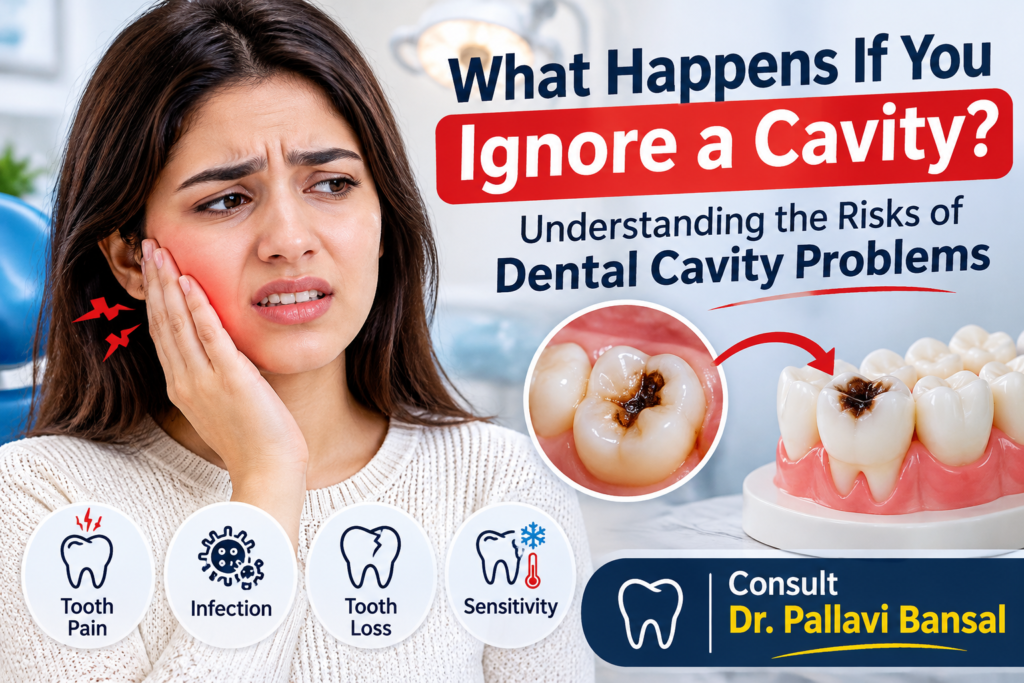
A cavity may seem like a small dental issue, especially when it does not cause pain. However, ignoring it can lead to serious oral health complications over time. Dental Cavity Problems develop when bacteria in the mouth produce acids that gradually damage tooth enamel. If left untreated, tooth decay can spread into deeper layers, causing pain, infection, and even tooth loss.
Understanding Dental Cavity Problems and getting timely dental care can help protect your teeth and maintain a healthy smile. Dr. Pallavi Bansal provides professional dental guidance to help patients understand and manage different dental concerns.
What Is a Dental Cavity?
A dental cavity is a permanently damaged area of a tooth that develops into a small hole due to tooth decay. It usually occurs when plaque bacteria feed on sugars from food and drinks, producing acids that weaken the enamel.
Common causes include:
- Poor oral hygiene habits
- Frequent consumption of sugary foods and drinks
- Not brushing and flossing regularly
- Frequent snacking throughout the day
- Insufficient fluoride protection
- Skipping regular dental check-ups
Cavities can develop in children, teenagers, and adults.
What Happens If You Ignore a Cavity?
Ignoring a cavity may allow tooth decay to progress through different stages. Here are some possible complications.
1. Tooth Sensitivity
One of the earliest signs of a cavity is sensitivity to hot, cold, or sweet foods. As enamel becomes damaged, the inner layers of the tooth become more exposed. You may experience discomfort while eating or drinking.
2. Increasing Tooth Pain
When decay spreads deeper into the tooth, it can reach the dentin and eventually the pulp, which contains nerves and blood vessels. This may cause persistent toothache and discomfort while chewing.
3. Tooth Infection
Untreated cavities can allow bacteria to reach the inner part of the tooth and cause an infection. In some cases, an abscess may develop, leading to swelling, pain, and other complications that require prompt dental treatment.
4. Damage to the Tooth Structure
As tooth decay progresses, more of the natural tooth structure can become damaged. A small cavity may eventually require a larger filling, dental crown, or other restorative treatment.
5. Risk of Tooth Loss
In advanced cases, severe tooth decay can damage a tooth beyond repair. If the tooth cannot be restored, extraction may become necessary.
Signs You Should Not Ignore
Watch out for these common warning signs:
- Toothache or frequent dental discomfort
- Sensitivity to hot and cold foods
- Visible holes or dark spots on teeth
- Pain while chewing
- Food frequently getting stuck between teeth
- Swelling around the affected tooth
Even if you do not experience pain, a cavity may still be developing.
How Can Dental Cavities Be Treated?
The treatment depends on how far the tooth decay has progressed.
- Fluoride Treatment: May help manage very early enamel damage before a cavity forms.
- Dental Fillings: Used to restore teeth affected by small or moderate cavities.
- Dental Crowns: May be recommended when a significant portion of the tooth is damaged.
- Root Canal Treatment: May be needed if decay reaches the tooth pulp.
- Tooth Extraction: Considered when the tooth is too damaged to be restored.
A dental examination helps determine the most appropriate treatment.
How to Prevent Dental Cavity Problems
Prevention is always better than waiting for dental complications. Follow these simple habits:
- Brush your teeth twice daily with fluoride toothpaste.
- Floss regularly to remove food particles between teeth.
- Limit sugary snacks and drinks.
- Drink enough water throughout the day.
- Schedule regular dental check-ups.
- Avoid ignoring tooth sensitivity or pain.
These habits can help reduce the risk of tooth decay and support long-term oral health.
Conclusion
Ignoring a cavity can turn a minor dental concern into a more serious problem. From tooth sensitivity and persistent pain to infection and possible tooth loss, untreated cavities can affect your overall oral health. Early diagnosis and appropriate treatment can help prevent complications and preserve your natural teeth.
If you are experiencing Dental Cavity Problems, consult Dr. Pallavi Bansal for a dental evaluation and guidance on suitable treatment options. Taking care of your teeth today can help protect your smile for years to come.