A straight smile can improve both your confidence and oral health. However, choosing the right orthodontic treatment can sometimes be confusing. If you are searching for the best dentist near me, understanding your options is a great first step. Traditional braces and clear aligners are two popular treatments for correcting crooked teeth, gaps, and bite problems. Each option offers different benefits based on your dental needs and lifestyle.
If you are searching for the best dentist near me, Dr. Pallavi Bansal can help you understand your options and choose a suitable treatment based on your dental condition.
What Are Traditional Braces?
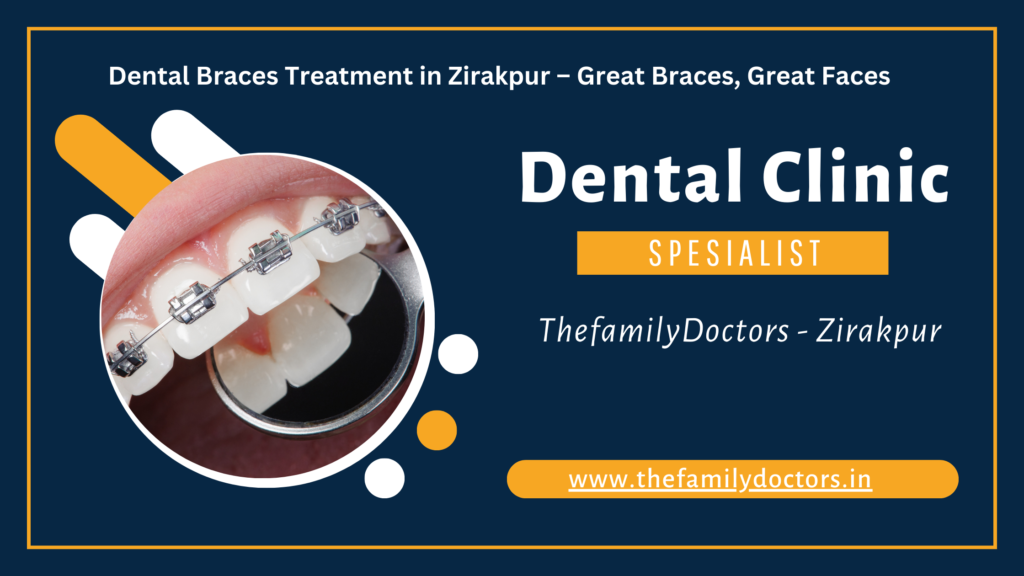
Traditional braces use metal or ceramic brackets attached to the teeth. These brackets are connected by wires that gradually move the teeth into their correct positions. Your dentist adjusts the braces periodically to guide tooth movement.
Benefits of Braces
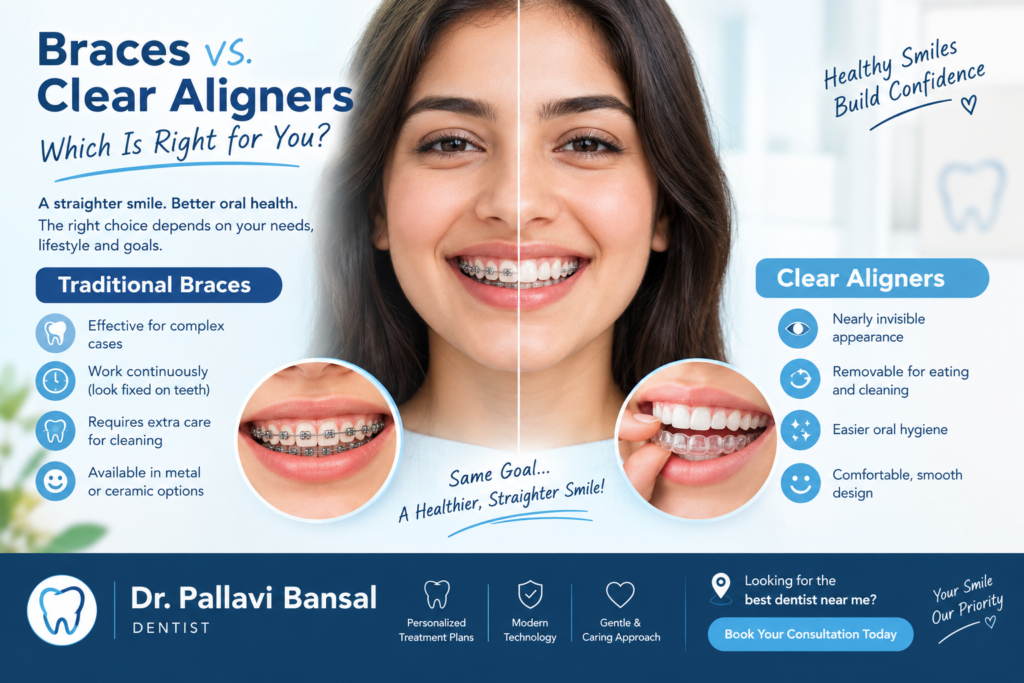
- Effective for complex cases: Braces can treat many alignment and bite problems, including some severe cases.
- Continuous treatment: They work throughout the day because they remain fixed to your teeth.
- Multiple options: Patients may choose metal braces or tooth-coloured ceramic braces, depending on their needs and preferences.
However, braces require careful oral hygiene. Food can get trapped around the brackets and wires, so brushing and cleaning between teeth are especially important. Some patients may also experience temporary discomfort after adjustments.
What Are Clear Aligners?
Benefits of Clear Aligners
- Nearly invisible appearance: Their transparent design makes them less noticeable than traditional braces.
- Removable trays: You can remove them while eating, drinking anything other than water, and brushing your teeth.
- Convenient oral hygiene: Removing the trays makes it easier to brush and floss normally.
- Comfortable design: Smooth plastic trays do not have metal brackets or wires that may irritate the mouth.
However, clear aligners require discipline. They generally need to be worn for around 20–22 hours daily, as recommended by your dentist. They may not be suitable for every complex orthodontic problem.
Braces vs. Clear Aligners: Key Differences
Choosing between braces and clear aligners depends on your dental condition, lifestyle, and treatment goals.
Appearance: Clear aligners are less noticeable, while metal braces are more visible.
Removability: Braces stay attached to your teeth, whereas clear aligners can be removed for meals and cleaning.
Oral hygiene: Cleaning around braces requires extra attention. Aligners can be removed to make brushing and flossing easier.
Treatment suitability: Braces can manage many complex alignment problems. Clear aligners work well for selected cases, but suitability depends on the complexity of your teeth and bite.
Discipline: Braces work continuously, while aligners require consistent wear to achieve the desired results.
Treatment duration varies for both options. Your dentist can estimate the likely timeline after examining your teeth.
Which Option Is Right for You?
The right choice depends on several factors, including the severity of misalignment, your bite, budget, daily routine, and personal preferences. If you want a discreet option and can wear removable trays consistently, clear aligners may be worth considering.
If your dental condition requires more complex tooth movements, traditional braces may be a better choice. A professional examination is essential before making your decision.
Consult Dr. Pallavi Bansal for Dental Guidance
Choosing the right orthodontic treatment begins with understanding your individual dental needs. Dr. Pallavi Bansal can help you explore suitable options and understand the benefits, limitations, and care requirements of each treatment.
If you are looking for the best dentist near me, schedule a dental consultation to discuss your concerns and treatment goals. Professional guidance can help you make an informed decision and work toward a healthier, straighter smile.
Conclusion
Both traditional braces and clear aligners can help improve tooth alignment and bite function. Braces may be suitable for many complex cases, while clear aligners offer a discreet and removable alternative for selected patients.
Consult Dr. Pallavi Bansal to determine which option is appropriate for your smile. With the right treatment plan and consistent dental care, you can take a positive step toward better oral health and a confident smile.