Joint pain is a common concern that can affect daily activities such as walking, climbing stairs, exercising, or performing routine household tasks. Two common types of arthritis are Osteoarthritis (OA) and Rheumatoid Arthritis (RA). Although both conditions can cause joint pain and stiffness, their causes, symptoms, and effects on the body are different. If you are looking for Best Joint Pain Treatment in Zirakpur, understanding these differences can help you recognize the symptoms and seek appropriate medical guidance at the right time.
What Is Osteoarthritis?
Osteoarthritis is a degenerative joint condition that develops when the protective cartilage between bones gradually wears down. As the cartilage becomes thinner, the bones may rub against each other, leading to pain, stiffness, swelling, and reduced joint movement.
Osteoarthritis commonly affects weight-bearing joints such as the knees and hips, although it can also affect the hands and spine. Symptoms may develop gradually and can become more noticeable during or after physical activity.
Age, previous joint injuries, repetitive stress on joints, excess body weight, and certain other factors may increase the risk of developing osteoarthritis.
What Is Rheumatoid Arthritis?
Rheumatoid Arthritis is an autoimmune condition. In this condition, the body’s immune system mistakenly attacks the lining of the joints, causing inflammation. This can result in pain, swelling, stiffness, and difficulty moving the affected joints.
Rheumatoid Arthritis commonly affects the hands, wrists, and feet and may affect joints on both sides of the body. Morning stiffness that lasts for an extended period is also commonly associated with RA.
Unlike Osteoarthritis, Rheumatoid Arthritis can affect more than just the joints and may require long-term medical management.
Osteoarthritis vs Rheumatoid Arthritis
While both conditions can cause joint discomfort, there are several important differences.
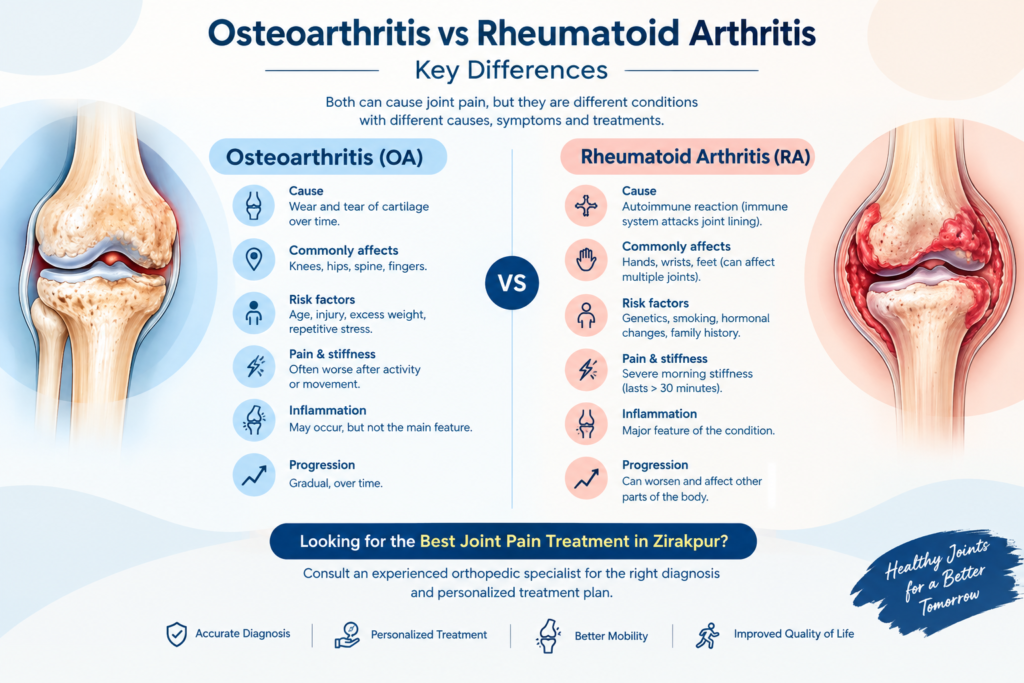
Cause: Osteoarthritis is mainly associated with gradual joint and cartilage deterioration, while Rheumatoid Arthritis is an autoimmune disease involving inflammation.
Joint involvement: Osteoarthritis often affects the knees, hips, spine, and hands. Rheumatoid Arthritis commonly affects the hands, wrists, and feet and can involve multiple joints.
Pain and stiffness: Osteoarthritis pain may become more noticeable with activity, while Rheumatoid Arthritis often causes significant stiffness, particularly after periods of inactivity.
Inflammation: Inflammation can occur in Osteoarthritis, but it is a major feature of Rheumatoid Arthritis.
Progression: Both conditions can worsen over time without appropriate management, but the underlying mechanisms are different.
When Should You Consult an Orthopedic Doctor?
Persistent joint pain should not always be considered a normal part of aging. If you experience recurring pain, swelling, stiffness, difficulty walking, reduced joint movement, or symptoms that interfere with daily activities, professional evaluation can help determine the possible cause.
An orthopedic specialist can assess your symptoms and medical history and may recommend appropriate examinations or tests when needed. Treatment depends on the type and severity of the condition and may include lifestyle changes, exercises, physiotherapy, medicines, or other treatments as medically appropriate.
Finding the Right Joint Pain Treatment in Zirakpur
Choosing appropriate care is important when joint pain starts affecting your quality of life. If you are looking for Best Joint Pain Treatment in Zirakpur, consulting an experienced orthopedic specialist can help you understand the underlying cause of your symptoms and available treatment options.
Dr. Mohit Bansal provides orthopedic consultation and guidance for patients experiencing different types of joint and musculoskeletal problems. Early evaluation can help identify the condition and support an appropriate treatment plan based on individual needs.
Conclusion
Osteoarthritis and Rheumatoid Arthritis may have similar symptoms, but they are different conditions with different underlying causes. Recognizing symptoms and seeking timely medical advice can help in managing joint problems effectively. If persistent joint pain, stiffness, or swelling is affecting your daily life, consult an orthopedic specialist for proper evaluation and personalized guidance.