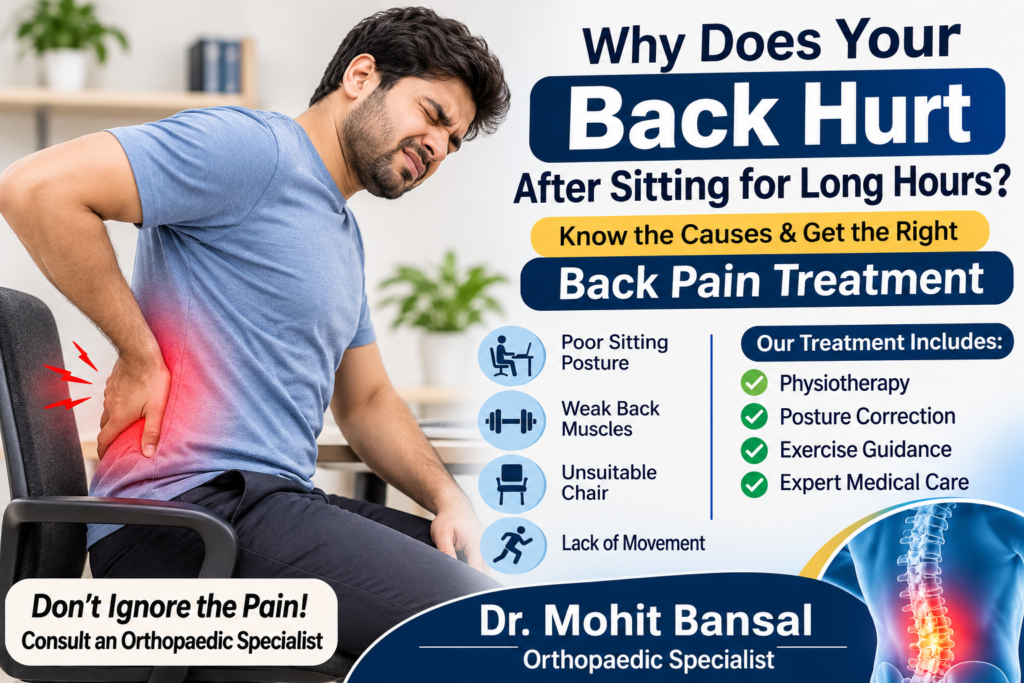
Sitting for long hours has become a common part of modern life. Whether you work in an office, study for extended periods, or spend a lot of time using a computer, prolonged sitting can affect your back health. Many people experience stiffness, muscle discomfort, and lower back pain after sitting for several hours. Choosing the right Back Pain Treatment can help manage discomfort, improve mobility, and support better spine health.
Understanding the causes of back pain and choosing the right Back Pain Treatment can help improve comfort and support better spinal health. Dr. Mohit Bansal provides guidance on understanding back pain and exploring suitable treatment options.
1. Poor Sitting Posture
One of the most common reasons for back pain after sitting is poor posture. Slouching, leaning forward, or sitting without proper back support can place additional stress on your spine.
Over time, these habits may contribute to muscle stiffness and discomfort in the lower back.
Helpful Tips:
- Sit with your back properly supported.
- Keep your feet flat on the floor.
- Avoid leaning forward for long periods.
- Adjust your chair and computer screen to a comfortable height.
2. Lack of Physical Movement
Remaining in the same sitting position for hours can make your back muscles stiff. Limited movement may also reduce flexibility and contribute to discomfort.
Taking short breaks throughout the day can help your body stay active.
Try standing, walking around, or gently changing your sitting position every 30–60 minutes.
3. Weak Back and Core Muscles
Your back and core muscles help support your spine and maintain body stability. When these muscles are weak or inactive, maintaining proper posture can become more difficult.
Regular physical activity, gentle stretching, and exercises recommended by a healthcare professional may help improve muscle strength and flexibility.
4. Unsuitable Chair and Workstation
An uncomfortable chair or poorly arranged workstation may contribute to back discomfort. A chair without adequate lumbar support can make it difficult to maintain a comfortable sitting position.
For better support, choose an adjustable chair with proper back support. Keep your monitor at eye level and arrange your workspace to avoid unnecessary bending.
5. Common Symptoms of Back Pain
Back pain can affect people differently. Some common symptoms include:
- Lower back discomfort after sitting.
- Muscle stiffness and tightness.
- Difficulty standing comfortably after sitting.
- Pain that increases with prolonged sitting.
- Reduced flexibility and movement.
If your pain is severe, persistent, or associated with leg weakness, numbness, or bladder or bowel problems, seek medical attention promptly.
6. Effective Back Pain Treatment Options
Finding the right Back Pain Treatment depends on the underlying cause, severity of discomfort, and overall health of the patient.
Some commonly recommended treatment options include:
Physiotherapy: Physiotherapy may help improve flexibility, strengthen supporting muscles, and restore comfortable movement.
Posture Correction: Learning proper sitting and standing techniques can reduce unnecessary pressure on the spine.
Gentle Exercises: Appropriate stretching and strengthening exercises may help improve back mobility.
Medication: A healthcare professional may recommend suitable medication when necessary to manage pain and inflammation.
Medical Evaluation: Persistent back pain may require further assessment to identify underlying spinal or muscular conditions.
7. Tips to Prevent Back Pain While Sitting
A few simple lifestyle changes can help reduce the chances of developing back discomfort.
- Avoid sitting continuously for several hours.
- Maintain a comfortable sitting posture.
- Take regular movement breaks.
- Use a supportive chair.
- Stay physically active.
- Avoid lifting heavy objects incorrectly.
- Consult a doctor if back pain continues.
When Should You Consult an Orthopaedic Doctor?
Occasional back discomfort may improve with rest and simple lifestyle changes. However, if back pain continues, frequently returns, or affects your daily activities, consulting an orthopaedic specialist is important. Dr. Mohit Bansal can help identify the possible causes of back pain and recommend suitable treatment options based on your condition.
Conclusion
Back pain after sitting for long hours can be related to poor posture, muscle weakness, limited movement, or an unsuitable workstation. Making small changes to your daily routine can support better spine health and reduce discomfort.
Choosing the right Back Pain Treatment at the appropriate time can help improve mobility and quality of life. For persistent back pain, consult an orthopaedic specialist like Dr. Mohit Bansal for proper medical guidance.