Maintaining good oral health is essential for a healthy and confident smile. When a tooth becomes damaged by decay, cracks, or fractures, your dentist may recommend a dental filling or a dental crown. Both treatments help restore damaged teeth, but they serve different purposes. Understanding Dental Crowns vs. Dental Fillings can help you learn which treatment may be suitable for your dental needs.
Dr. Pallavi Bansal emphasizes the importance of early diagnosis and appropriate dental treatment to protect natural teeth and maintain long-term oral health.
What Are Dental Fillings?
Dental fillings are commonly used to repair teeth affected by cavities or minor damage. During the procedure, the dentist removes the decayed portion of the tooth and fills the space with a suitable dental material.
Common filling materials include composite resin, amalgam, and other restorative materials. Tooth-coloured composite fillings are often chosen because they blend naturally with the surrounding teeth.
Benefits of Dental Fillings
- Preserve natural tooth structure: Only the damaged or decayed area is usually removed.
- Quick treatment: Many fillings can be completed in a single dental visit.
- Cost-effective option: Fillings are generally less expensive than crowns.
- Natural appearance: Tooth-coloured fillings can match the colour of natural teeth.
Dental fillings are generally suitable for small to moderate cavities when enough healthy tooth structure remains to support the restoration.
What Are Dental Crowns?
A dental crown is a custom-made cap that covers the visible portion of a damaged tooth. It restores the tooth’s shape, size, strength, and appearance. Crowns may be recommended when a tooth has extensive decay, a large filling, significant cracks, or has undergone root canal treatment.
Dental crowns can be made from porcelain, ceramic, metal, or a combination of materials. The dentist selects the appropriate type based on the tooth’s location, condition, bite, and aesthetic requirements.
Benefits of Dental Crowns
- Protect weakened teeth: Crowns cover and help protect damaged tooth structure.
- Restore strength: They can improve the function of teeth affected by extensive damage.
- Improve appearance: Crowns can restore the shape and colour of discoloured or damaged teeth.
- Support treated teeth: A crown may be recommended after root canal treatment, depending on the tooth’s condition.
Crowns are often suitable when a filling alone cannot adequately restore or protect the tooth.
Dental Crowns vs. Dental Fillings: Key Differences
Understanding the differences between these treatments can help you make informed decisions with your dentist.
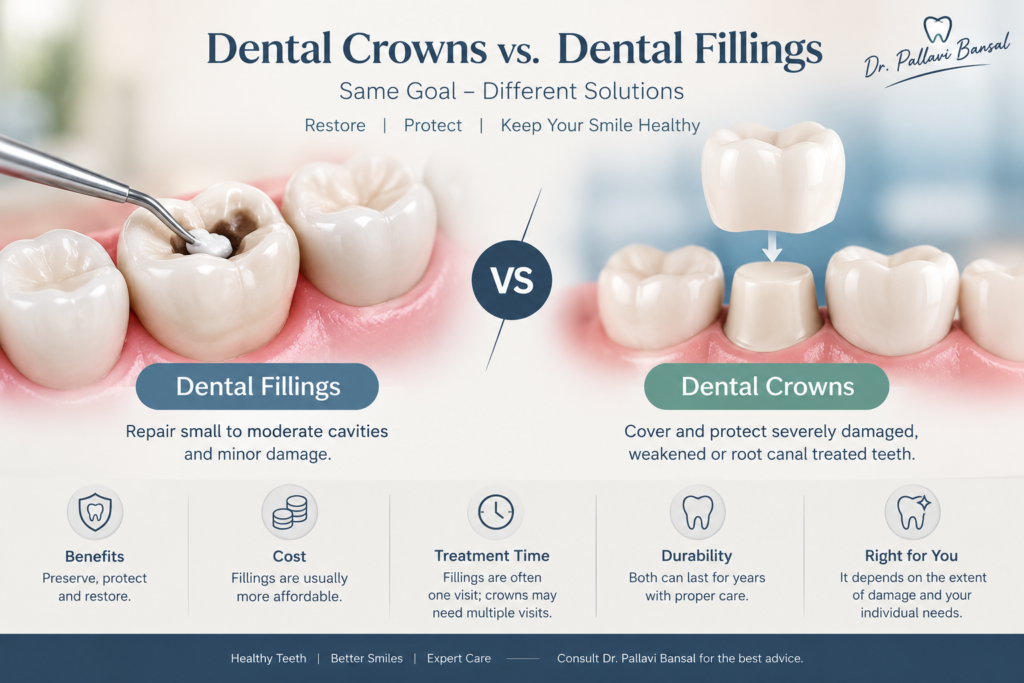
1. Purpose: Fillings repair a specific area affected by decay or minor damage, while crowns cover the tooth to restore and protect it when more extensive damage is present.
2. Tooth preparation: Fillings generally require less removal of healthy tooth structure. Crowns usually require reshaping the tooth so the crown can fit securely.
3. Treatment time: Many fillings can be completed in one appointment. Traditional crowns may require tooth preparation, impressions or digital scans, and a separate appointment for placement, although some clinics offer same-day crowns.
4. Cost: Fillings are usually more affordable. Crowns generally cost more because they require additional materials and laboratory or digital fabrication.
5. Durability: Both treatments can last for years with proper care. Their lifespan depends on the material used, oral hygiene, biting forces, and the condition of the tooth.
Which Treatment Is Right for You?
The right choice depends on the extent of tooth damage and the amount of healthy tooth structure remaining.
A dental filling may be appropriate if you have a small cavity or limited damage. A dental crown may be recommended if your tooth is significantly weakened, extensively damaged, or requires additional protection.
Your dentist will examine your teeth and may recommend dental X-rays to assess the extent of the damage. Avoid delaying treatment, as untreated tooth decay can progress and lead to more complicated dental problems.
Dr. Pallavi Bansal can help patients understand their treatment options and choose an appropriate restoration based on their individual dental condition.
How to Care for Crowns and Fillings
Good oral hygiene helps maintain both dental crowns and fillings. Follow these simple tips:
- Brush twice daily with fluoride toothpaste.
- Floss regularly to clean between your teeth.
- Limit sugary snacks and drinks.
- Avoid chewing hard objects such as ice or pens.
- Visit your dentist regularly for examinations and professional cleaning.
- Contact your dentist if you experience pain, sensitivity, or a loose or damaged restoration.
Conclusion
Understanding Dental Crowns vs. Dental Fillings helps you recognize how these treatments restore and protect damaged teeth. Fillings are generally suitable for smaller cavities, whereas crowns provide additional coverage and support for teeth with more extensive damage.
Choosing the right treatment requires a professional dental examination. For personalized guidance on dental fillings, crowns, and restorative dentistry, consult Dr. Pallavi Bansal to explore the options that best suit your oral health needs. Early treatment and consistent dental care can help protect your natural teeth and maintain a healthy smile for years to come.