Losing a tooth can affect more than just your smile. It may make chewing difficult, affect speech, and impact your confidence. The good news is that modern dentistry offers several solutions to restore your smile and help improve oral function. Understanding the available Tooth Replacement Options can help you make an informed decision with guidance from a dental professional.
Dr. Pallavi Bansal can help patients understand different tooth replacement treatments based on their oral health, individual needs, and preferences.
Why Is It Important to Replace Missing Teeth?
Missing teeth can affect your overall oral health if left untreated. Depending on the location and number of missing teeth, you may experience difficulty chewing food or changes in speech. Nearby teeth may also gradually shift into the empty space, potentially affecting your bite.
Replacing missing teeth can help restore chewing ability, maintain the alignment of remaining teeth, and improve the appearance of your smile. A dentist can assess your condition and recommend a suitable treatment plan.
What Are the Best Tooth Replacement Options?
There are several Tooth Replacement Options available today. The right choice depends on factors such as the number of missing teeth, gum health, jawbone condition, budget, and personal preferences.
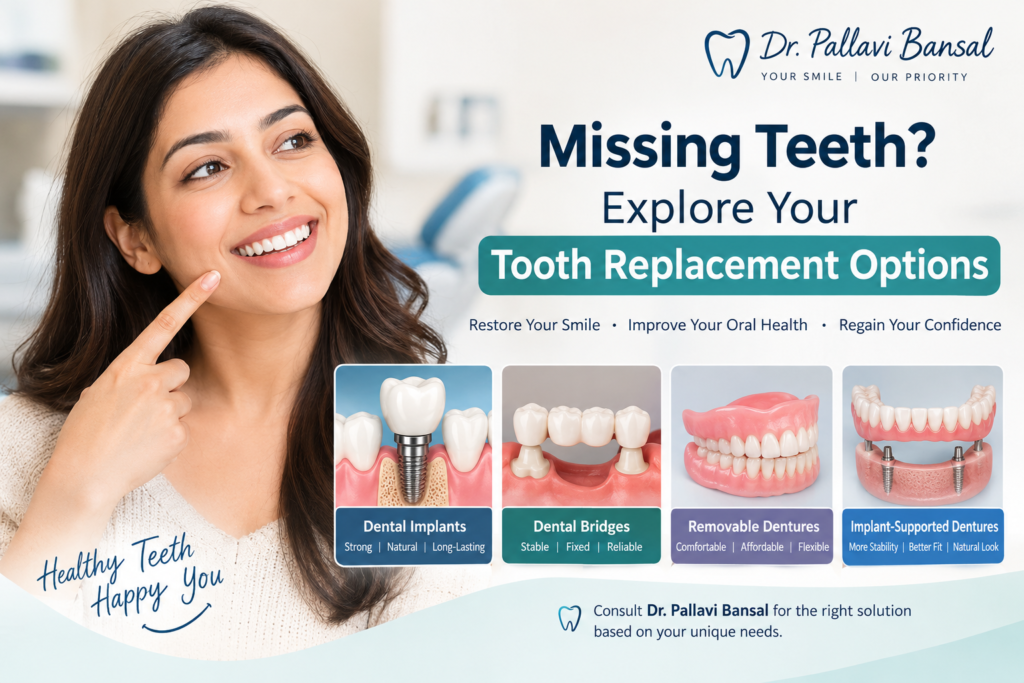
1. Dental Implants
Dental implants are a popular option for replacing missing teeth. They involve placing a small implant into the jawbone to support a replacement tooth, such as a crown.
Once the implant has integrated with the bone, the dentist attaches the replacement tooth. Dental implants can provide stability and a natural-looking appearance. They may also help maintain jawbone health by providing stimulation to the bone.
However, implants require suitable bone support, healthy gums, and a thorough dental evaluation. The treatment may take several months to complete.
2. Dental Bridges
A dental bridge replaces one or more missing teeth by filling the gap with artificial teeth supported by neighbouring teeth or, in some cases, dental implants.
Bridges are fixed restorations, meaning they are not normally removed by the patient. They can restore chewing function and improve the appearance of your smile.
A traditional dental bridge may require reshaping the supporting teeth. Your dentist will explain the benefits, limitations, and maintenance requirements before treatment.
3. Removable Dentures
Dentures are removable appliances designed to replace missing teeth. They may replace a few teeth or an entire set of teeth, depending on the patient’s needs.
Partial dentures are used when some natural teeth remain, while complete dentures replace all teeth in the upper or lower jaw.
Dentures can improve appearance and chewing ability without requiring implant surgery. However, they need regular cleaning, proper fitting, and occasional adjustments to maintain comfort and function.
4. Implant-Supported Dentures
Implant-supported dentures combine dental implants with a denture to provide additional stability. The implants help hold the denture in place, which may improve comfort and reduce unwanted movement compared with some conventional dentures.
This option may be suitable for patients who have lost several or all teeth. A dental examination is necessary to determine whether there is sufficient bone support and whether the treatment is appropriate.
How Do You Choose the Right Tooth Replacement Option?
Choosing among different Tooth Replacement Options requires careful consideration of your oral health and treatment goals.
Your dentist may evaluate:
- The number and location of missing teeth.
- The health of your gums and remaining teeth.
- Jawbone strength and bone availability.
- Your budget and expected treatment timeline.
- Your ability to maintain the restoration with daily oral hygiene.
Every patient is different, so a personalised consultation is important before making a decision.
How Can You Care for Your Replacement Teeth?
Good oral hygiene is essential for maintaining dental restorations. Brush twice daily with fluoride toothpaste, clean between your teeth, and follow your dentist’s recommendations. Dental bridges and implants require careful cleaning around the restoration, while removable dentures should be cleaned as instructed.
Regular dental check-ups help identify potential problems early and ensure your replacement teeth remain comfortable and functional.