Have you ever heard a clicking or popping sound in your knee while walking, bending, standing up, or climbing stairs? Many people experience this and wonder, “Why does your knee make a clicking sound?” Knee clicking is common and does not always indicate a serious problem. However, when the sound is accompanied by pain, swelling, or stiffness, it may require medical attention.
Understanding the possible causes of knee clicking can help you take better care of your joints and recognize when to consult an orthopedic specialist.
What Causes a Clicking Sound in the Knee?
There are several possible reasons why your knee makes a clicking or popping sound while walking, bending, or climbing stairs. In many cases, knee clicking is harmless, especially when there is no pain or swelling.
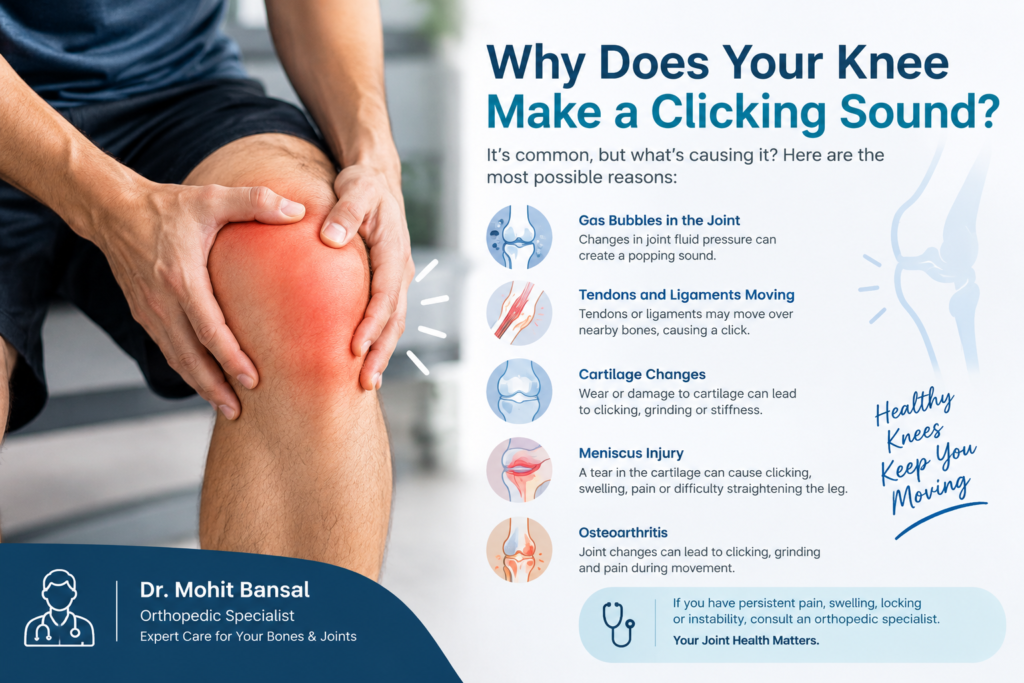
1. Gas Bubbles in the Joint
The knee contains synovial fluid, which helps lubricate the joint and reduce friction. Sometimes, changes in pressure within this fluid can cause gas bubbles to form or collapse, producing a clicking or popping sound. This is generally harmless when there is no pain or swelling.
2. Tendons and Ligaments Moving
Tendons and ligaments support the knee and help it move smoothly. During bending or straightening, a tendon or ligament may move over a nearby bony structure, creating a clicking sensation. This may happen occasionally without indicating a serious condition.
3. Cartilage Changes
Cartilage provides a smooth surface that allows the bones in the knee joint to move comfortably. Damage or wear in the cartilage may cause clicking, grinding, discomfort, or stiffness. These symptoms should be evaluated by a healthcare professional.
4. Meniscus Injury
The meniscus is a piece of cartilage that cushions the knee joint. A tear can occur following a sudden twist, sports injury, or other trauma. Symptoms may include clicking, pain, swelling, or difficulty straightening the knee.
5. Osteoarthritis
Osteoarthritis is a joint condition in which cartilage gradually changes and wears down. It can cause clicking or grinding sounds, pain during movement, stiffness, and reduced mobility. An orthopedic specialist can assess the symptoms and recommend appropriate management.
When Should You Be Concerned About Knee Clicking?
If you are asking, “Why does your knee make a clicking sound?”, it is important to consider whether other symptoms are present.
Clicking without pain is often harmless. However, you should seek medical advice if you experience:
- Persistent knee pain during walking or bending.
- Swelling or warmth around the knee.
- A knee that locks or becomes difficult to straighten.
- A feeling that your knee may give way.
- Clicking that begins after a fall, twist, or sports injury.
- Difficulty walking or putting weight on the affected leg.
If you cannot bear weight after an injury, have significant swelling, or notice a hot, red knee with fever, seek prompt medical care.
How Can You Keep Your Knee Joints Healthy?
Taking care of your knee joints can support mobility and help reduce unnecessary strain.
Stay physically active: Choose suitable activities such as walking or swimming, depending on your comfort and health. Increase activity gradually.
Strengthen supporting muscles: Exercises recommended by a physiotherapist can help strengthen the muscles around your knees and improve joint stability.
Warm up before exercise: Gentle warm-up movements prepare your muscles and joints for physical activity.
Avoid sudden increases in activity: Increase exercise intensity gradually, especially if you are returning to sports or physical training.
Maintain a balanced diet: Include protein, calcium, vitamin D, fruits, vegetables, and other nutritious foods to support overall bone and muscle health.
Do not ignore persistent symptoms: If clicking is accompanied by pain or swelling, consult a healthcare professional rather than relying on home remedies alone.
How Is Knee Clicking Diagnosed?
An orthopedic specialist may ask about your symptoms, medical history, and any previous injuries. A physical examination can help assess knee movement, tenderness, and stability. Depending on the findings, imaging tests such as X-rays or an MRI may be recommended. Treatment depends on the underlying cause and may include activity modification, physiotherapy, medication prescribed by a doctor, or other appropriate interventions.
Consult Dr. Mohit Bansal for Knee and Joint Concerns
Knee clicking is not always a reason to worry, but associated pain, swelling, or restricted movement should not be overlooked. Understanding the cause is the first step toward appropriate care.
Dr. Mohit Bansal can help patients understand their knee and joint symptoms and explore suitable orthopedic evaluation and treatment options. If your knee clicking is persistent or uncomfortable, seek professional medical advice to protect your joint health and maintain comfortable movement.