Cervical spondylosis is a common age-related condition that affects the bones, discs, and joints of the neck. It develops due to wear and tear in the cervical spine over time. Although it is more common in older adults, poor posture, prolonged screen time, and previous neck injuries may also contribute to neck discomfort. If you are looking for an orthopedic dr in zirakpur, Dr. Mohit Bansal can provide professional evaluation and guidance on suitable treatment options to help manage cervical spondylosis and maintain better neck health.
What Is Cervical Spondylosis?
Cervical spondylosis occurs when the discs and joints in the neck gradually change with age. The discs may lose moisture and flexibility, while bone spurs can develop around the vertebrae. In some cases, these changes may put pressure on nearby nerves, causing pain, stiffness, or numbness.
Early diagnosis and appropriate care can help manage symptoms and improve daily comfort.
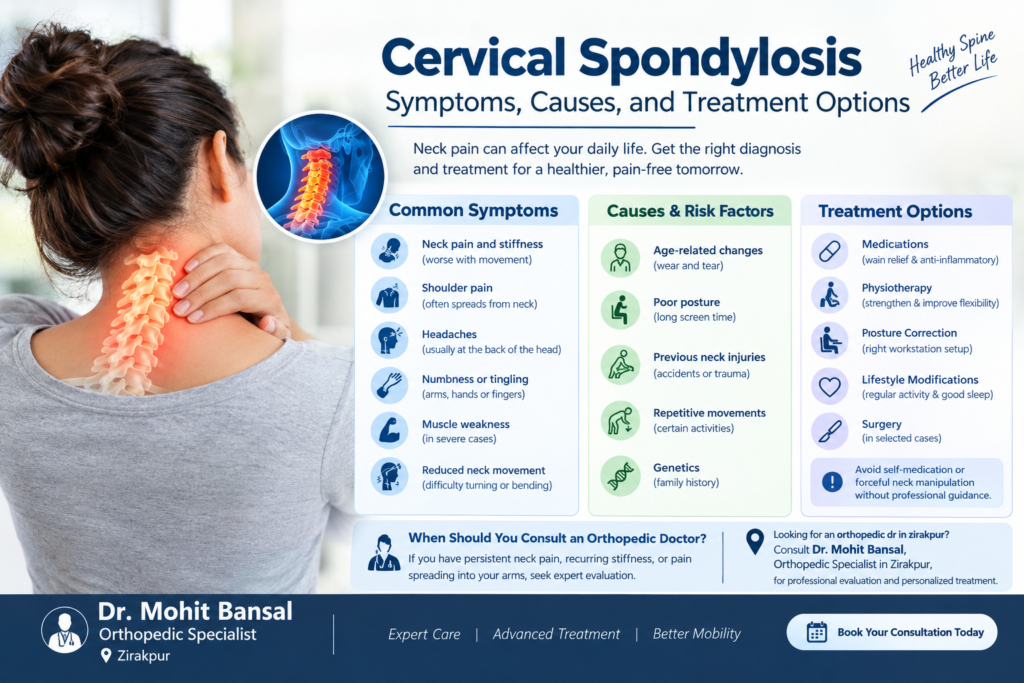
Common Symptoms of Cervical Spondylosis
Symptoms can vary depending on the severity of the condition. Some people may not experience noticeable symptoms, while others may develop persistent discomfort.
Common symptoms include:
- Neck pain and stiffness: Discomfort that may worsen with movement.
- Shoulder pain: Pain that spreads from the neck to the shoulders.
- Headaches: Headaches that may begin near the back of the head.
- Numbness or tingling: Sensations in the arms, hands, or fingers when nerves are affected.
- Muscle weakness: Reduced strength in the arms or hands in more advanced cases.
- Reduced neck movement: Difficulty turning or bending the neck comfortably.
If you experience progressive weakness, difficulty walking, or problems with balance or hand coordination, seek prompt medical assessment.
Causes and Risk Factors
Cervical spondylosis usually develops gradually. Several factors may increase the risk of developing this condition:
Age-related changes: Natural wear and tear can affect the discs and joints of the cervical spine.
Poor posture: Keeping your head bent forward for long periods while using a phone or computer can increase neck strain.
Previous neck injuries: Past accidents or injuries may contribute to changes in the cervical spine.
Repetitive movements: Certain activities involving repeated neck movements may increase discomfort.
Genetics: Family history may influence the likelihood of developing degenerative spinal changes.
Maintaining good posture and taking regular breaks from screens can help reduce unnecessary neck strain.
Treatment Options for Cervical Spondylosis
Treatment depends on the symptoms, severity, and whether nerves or the spinal cord are affected. Many cases can be managed without surgery.
1. Medications: A doctor may recommend suitable pain-relieving or anti-inflammatory medication, depending on your health and symptoms.
2. Physiotherapy: Guided exercises can improve neck flexibility, strengthen supporting muscles, and help maintain posture.
3. Posture Correction: Adjusting your workstation, keeping screens near eye level, and avoiding prolonged downward head positioning may help reduce strain.
4. Lifestyle Modifications: Gentle physical activity, regular breaks, and appropriate sleeping support may help manage discomfort.
5. Surgery: Surgery may be considered in selected cases involving significant nerve compression, spinal cord compression, or worsening neurological symptoms when appropriate.
Avoid self-medicating or attempting forceful neck manipulation without professional guidance.
When Should You Consult an Orthopedic Doctor?
Do not ignore persistent neck pain, recurring stiffness, or pain spreading into your arms. A medical professional can assess your symptoms, perform a physical examination, and recommend imaging or other tests when necessary.
If you are looking for an orthopedic dr in zirakpur, consult Dr. Mohit Bansal, Orthopedic Specialist in Zirakpur, for professional evaluation and guidance on suitable treatment options for cervical spondylosis.
Conclusion
Cervical spondylosis can affect neck movement, comfort, and daily activities, but appropriate treatment and lifestyle changes may help manage its symptoms. Early evaluation, guided exercises, and proper posture can support better neck health. Consult Dr. Mohit Bansal for an individualized assessment if you experience persistent neck pain or related symptoms.