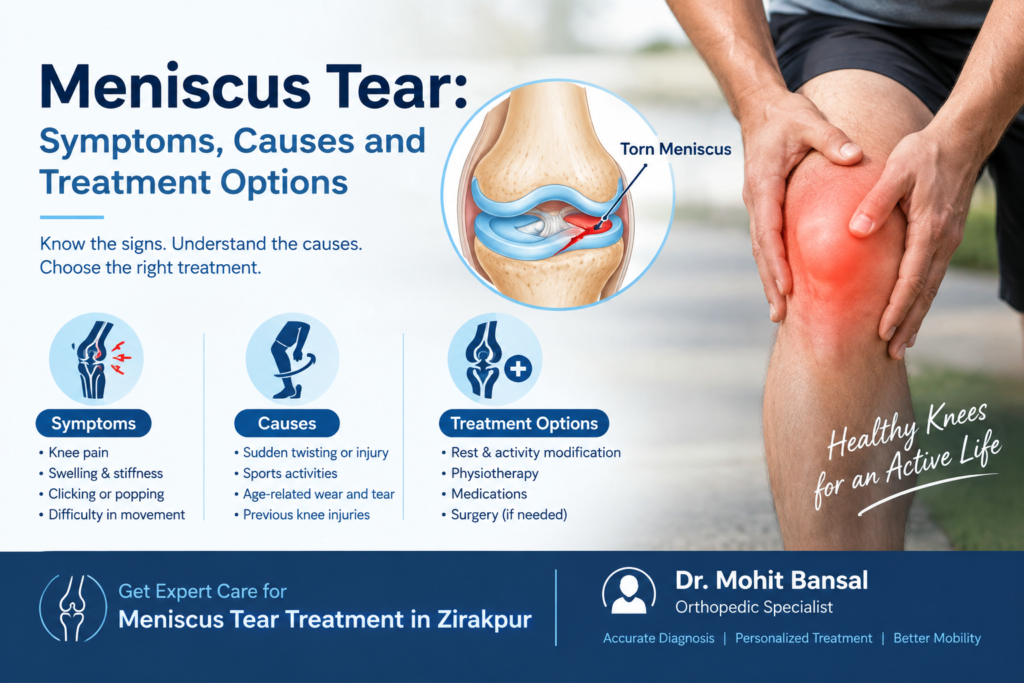
A meniscus tear is a common knee injury that can affect people of different ages. The meniscus is a C-shaped piece of cartilage located between the thighbone and shinbone. It acts as a cushion, helping absorb shock and providing stability to the knee joint. A sudden twisting movement, sports injury, or age-related wear and tear can cause the meniscus to tear. Understanding the symptoms, causes, and available treatment options can help in seeking timely medical care. If you are experiencing knee pain or symptoms of a meniscus injury, seeking Meniscus Tear Treatment in Zirakpur can help you receive proper evaluation and appropriate care.
What Is a Meniscus Tear?
A meniscus tear occurs when the cartilage in the knee is damaged or torn. It can happen during activities that involve twisting, turning, squatting, or sudden changes in direction. Athletes who participate in football, basketball, cricket, and other sports may have a higher risk of this injury. In older adults, the meniscus can become weaker with age, making it more vulnerable to tears during normal movement
Common Symptoms of a Meniscus Tear
The symptoms of a meniscus tear can vary depending on the severity and location of the injury. Common signs include:
Knee pain, especially while twisting or bending
Swelling or stiffness around the knee
Difficulty fully bending or straightening the knee
A clicking or popping sensation
A feeling that the knee is catching or locking
Difficulty walking or putting weight on the affected leg
A feeling that the knee may give way
Some meniscus tears may cause mild symptoms initially, while others can result in significant pain and restricted movement.
Causes and Risk Factors
A meniscus tear commonly occurs because of a sudden twisting or rotating movement while putting weight on the knee. Sports activities are a frequent cause, particularly those involving sudden stops, turns, or changes in direction.
Age is another important risk factor. As people get older, the meniscus gradually becomes less flexible and more prone to degeneration. This means that even a relatively simple movement may sometimes cause a tear.
Previous knee injuries and activities that place repeated stress on the knee may also increase the risk.
Meniscus Tear Treatment Options
Treatment depends on factors such as the type and size of the tear, its location, the patient’s age, activity level, and overall knee condition. For some minor tears, conservative treatment may be recommended. This may include rest, activity modification, ice application, and medicines as advised by a healthcare professional.
Physiotherapy can also help improve knee strength, flexibility, balance, and range of motion. A structured rehabilitation program may support recovery and help the patient gradually return to normal activities.
For larger or more severe tears, or when symptoms continue despite non-surgical treatment, a specialist may consider surgical options. Arthroscopic procedures may be used in selected cases to repair or remove damaged portions of the meniscus. The appropriate approach depends on the individual patient’s condition and should be determined after proper evaluation.
When Should You See an Orthopedic Specialist?
Persistent knee pain, swelling, locking, or difficulty walking should not be ignored. Early evaluation can help identify the cause of symptoms and determine an appropriate treatment plan. If a meniscus tear is suspected, an orthopedic specialist may perform a physical examination and recommend imaging tests when required.
For people seeking Meniscus Tear Treatment in Zirakpur, Dr. Mohit Bansal provides orthopedic evaluation and treatment guidance based on the patient’s knee condition. Proper diagnosis and a personalized treatment plan can help manage symptoms and support a safe return to daily activities.
Conclusion
A meniscus tear can affect knee movement, stability, and comfort, but appropriate evaluation and treatment can help manage the condition. Recognizing symptoms such as pain, swelling, stiffness, clicking, and knee locking is important. Depending on the severity of the injury, treatment may include rest, physiotherapy, medication, or surgery in selected cases.
If you are experiencing ongoing knee pain or symptoms of a possible meniscus injury, consulting an orthopedic specialist such as Dr. Mohit Bansal can help you understand the condition and available treatment options.