Bleeding gums are a common oral health concern that should not be ignored. While occasional bleeding may happen due to brushing too hard, frequent or unexplained gum bleeding can be a sign of an underlying dental problem. Understanding the causes and getting timely treatment can help protect your gums and teeth. If you are looking for a Dentist near me in Zirakpur, a timely dental checkup can help identify the cause of bleeding gums and ensure proper care.
If you are searching for a Dentist near me in Zirakpur, consulting a qualified dental professional can help identify the reason behind bleeding gums and recommend the right treatment.
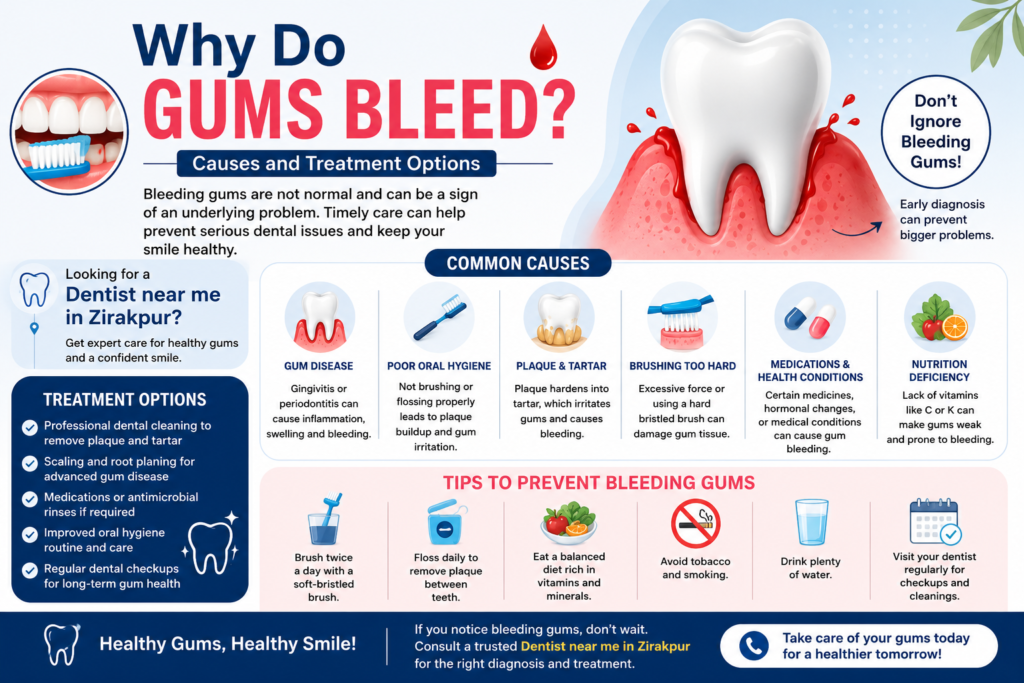
Common Causes of Bleeding Gums
1. Gum Disease
One of the most common causes of bleeding gums is gum disease. It can begin when plaque, a sticky layer of bacteria, builds up around the teeth and gums. In the early stage, known as gingivitis, gums may become red, swollen, tender, and bleed while brushing or flossing.
If gum disease progresses, it can affect the tissues supporting the teeth and may require more advanced dental care.
2. Poor Oral Hygiene
Inadequate brushing and flossing can allow plaque and food particles to accumulate around the gumline. Over time, this buildup can irritate the gums and cause inflammation and bleeding.
Maintaining a consistent oral hygiene routine is important for keeping gums healthy.
3. Brushing Too Hard
Using excessive force while brushing can irritate or damage the gum tissue. A soft-bristled toothbrush and gentle brushing technique are generally better for maintaining healthy gums.
4. Flossing Problems
If you have recently started flossing, your gums may bleed temporarily because they are not accustomed to it. However, persistent bleeding should be discussed with a dentist rather than ignored.
5. Dental Plaque and Tartar
Plaque that is not removed regularly can harden into tartar. Tartar cannot usually be removed effectively with regular brushing alone and may contribute to gum inflammation and bleeding. Professional dental cleaning may be recommended when tartar has accumulated.
6. Other Factors
Certain medications, nutritional deficiencies, hormonal changes, and some medical conditions can also contribute to gum bleeding. If bleeding is frequent or occurs without an obvious reason, professional evaluation is important.
Treatment Options for Bleeding Gums
Treatment depends on the underlying cause. For mild gum inflammation, improving daily oral hygiene may help. A dentist may recommend professional cleaning to remove plaque and tartar.
For more advanced gum problems, additional periodontal treatment may be needed. Your dentist may also recommend changes to your brushing and flossing technique, along with regular dental checkups.
If a medication or another health-related factor may be contributing to the bleeding, your dentist can guide you on the appropriate next step. Do not stop or change prescribed medication without speaking with the healthcare professional who prescribed it.
How to Prevent Bleeding Gums
You can support healthy gums by following a few simple habits:
- Brush your teeth twice a day with a soft-bristled toothbrush.
- Clean between your teeth regularly with floss or another suitable interdental cleaner.
- Limit frequent sugary snacks and drinks.
- Maintain regular dental checkups and professional cleanings when recommended.
- Replace your toothbrush when the bristles become worn.
- Avoid ignoring persistent gum swelling, tenderness, or bleeding.
- Avoid ignoring persistent gum swelling, tenderness, or bleeding.
When Should You Visit a Dentist?
Occasional gum bleeding may not always indicate a serious problem, but frequent, heavy, or unexplained bleeding deserves professional attention. Swollen gums, persistent bad breath, loose teeth, or gum recession are additional reasons to schedule a dental examination.
For those looking for a Dentist near me in Zirakpur, Dr. Pallavi Bansal can help assess your oral health and determine an appropriate treatment approach based on your dental needs.
Conclusion
Bleeding gums can have several causes, from plaque buildup and gingivitis to brushing habits and other health factors. Identifying the cause early can make treatment easier and help prevent further dental problems. Good oral hygiene, regular dental visits, and timely professional care are important steps toward maintaining healthy gums and a healthy smile.