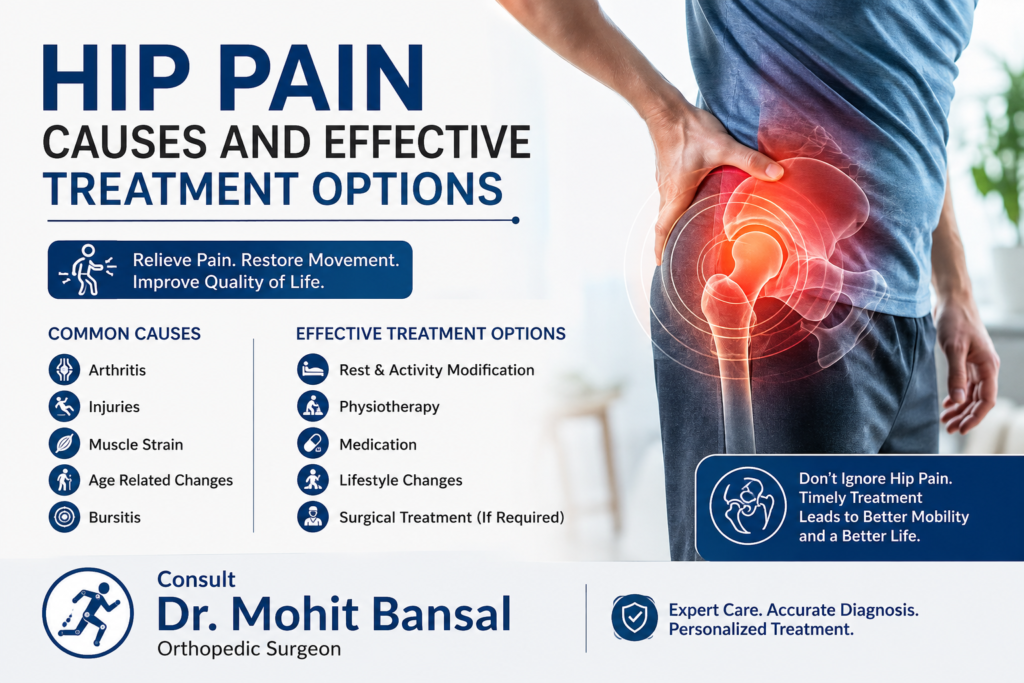
Hip pain is a common problem that can affect people of different ages. It may develop suddenly after an injury or gradually due to conditions such as arthritis, muscle strain, or age-related joint changes.
Hip pain can make everyday activities such as walking, climbing stairs, sitting, or sleeping uncomfortable. Understanding the possible causes and available hip pain treatment options can help you take the right steps toward better mobility.
What Causes Hip Pain?
Hip pain can have several causes. Identifying the underlying reason is important because treatment depends on the specific condition.
Arthritis
Osteoarthritis is a common cause of hip pain. It occurs when the cartilage that protects the joint gradually wears down. This may result in pain, stiffness, and difficulty moving the hip.
Muscle or Tendon Strain
Overuse, physical activity, or sudden movements can strain the muscles and tendons around the hip. This may cause soreness, tenderness, and discomfort, especially during movement.
Hip Injuries
Falls, sports injuries, or accidents can cause injuries around the hip. Depending on the severity, treatment may include rest, rehabilitation, medication, or other medical care.
Bursitis
Bursae are small fluid-filled sacs that reduce friction around joints. When a bursa becomes irritated or inflamed, it can cause pain around the outer side of the hip.
Age-Related Joint Changes
As people age, changes in the joints, muscles, and bones may contribute to hip discomfort. Regular evaluation can help identify the underlying cause.
Symptoms of Hip Pain
Hip pain may occur along with stiffness, tenderness, reduced range of motion, swelling, or difficulty walking. Persistent or worsening symptoms should not be ignored. According to Dr. Mohit Bansal, an orthopedic evaluation can help identify the cause of ongoing hip pain and determine an appropriate treatment approach.
Effective Hip Pain Treatment Options
The appropriate hip pain treatment depends on the cause and severity of the condition.
Rest and Activity Modification
For mild pain caused by overuse or strain, temporarily reducing activities that worsen symptoms may help. As the pain improves, normal activities can be gradually resumed according to professional guidance.
Physiotherapy
Physiotherapy can help improve flexibility, muscle strength, balance, and hip movement. A qualified professional can recommend exercises according to the patient’s condition.
Medication
Depending on the cause of the pain, a healthcare professional may recommend suitable pain-relieving or anti-inflammatory medication. Medicines should only be taken as directed by a healthcare professional.
Lifestyle Changes
Appropriate physical activity and strengthening exercises can help support joint function. Maintaining healthy movement habits and avoiding activities that repeatedly trigger pain may also be beneficial.
Surgical Treatment
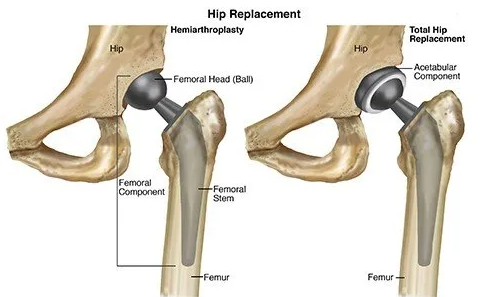
In cases involving significant joint damage or certain serious injuries, surgery may sometimes be recommended. The type of procedure depends on the underlying condition and the individual’s overall health.
When Should You See an Orthopedic Doctor?
If hip pain continues, becomes severe, repeatedly returns, or makes everyday activities difficult, it is important to seek professional evaluation. Dr. Mohit Bansal can assess the symptoms and help determine the underlying cause before recommending an appropriate treatment plan.
Early evaluation may help prevent a minor problem from becoming more difficult to manage.
Conclusion
Hip pain can result from arthritis, injuries, muscle strains, bursitis, and other conditions. The right hip pain treatment depends on the underlying cause and may include activity modification, physiotherapy, medication, lifestyle changes, or surgery when appropriate
If you are experiencing persistent hip pain, consulting Dr. Mohit Bansal can help you understand the possible cause and explore suitable treatment options for improving mobility and quality of life.