By Dr. Mohit Bansal
Knee pain is one of the most common problems affecting people of all age groups. Whether you are a young athlete, a working professional, or a senior citizen, knee discomfort can limit your daily activities and reduce your quality of life. The good news is that not all knee pain requires surgery. In fact, many patients can recover completely with the right non-surgical treatment approach.
According to leading orthopedic specialist Dr. Mohit Bansal, early diagnosis and timely conservative management play a crucial role in preventing the need for surgery. Understanding the cause of knee pain is the first step toward effective treatment.
Common Causes of Knee Pain
Knee pain can occur due to several reasons, including:
- Osteoarthritis
- Ligament injuries
- Meniscus tears
- Tendonitis
- Muscle weakness or imbalance
- Obesity-related joint stress
- Postural issues
In many cases, mild to moderate osteoarthritis and early ligament injuries respond very well to non-surgical treatments.
Non-Surgical Treatment Options for Knee Pain
1. Medications and Pain Management
For mild to moderate knee pain, medications such as anti-inflammatory drugs can help reduce pain and swelling. These medicines are usually prescribed for short-term relief while addressing the underlying issue through therapy.
Topical gels and pain-relief sprays can also provide temporary comfort, especially in cases of arthritis.
2. Physiotherapy and Exercise Therapy
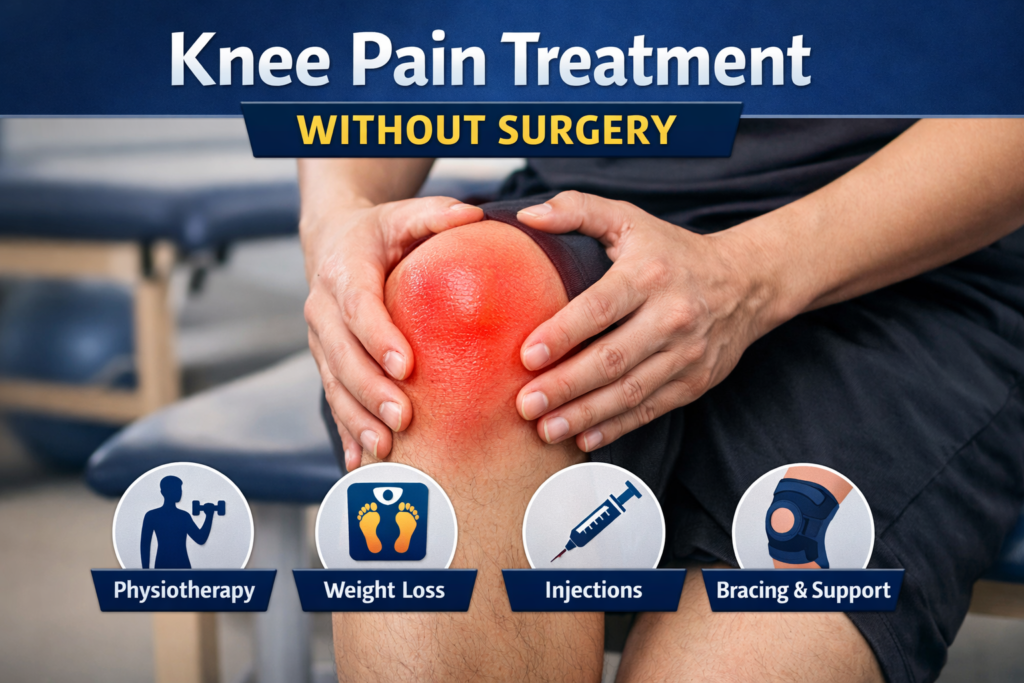
Physiotherapy is one of the most effective non-surgical treatments for knee pain. A structured physiotherapy program strengthens the muscles around the knee, improves flexibility, and enhances joint stability.
Strengthening the quadriceps, hamstrings, and calf muscles reduces pressure on the knee joint. Regular guided exercises can:
- Improve mobility
- Reduce stiffness
- Prevent further damage
- Delay or avoid surgery
Consistency is key. Many patients experience significant improvement within a few weeks of starting therapy.
3. Weight Management
Excess body weight puts additional stress on the knee joints. Even a small reduction in weight can significantly reduce knee pain. Studies show that losing just 5–10% of body weight can decrease joint pressure and improve mobility.
A balanced diet combined with low-impact exercises such as walking, cycling, and swimming can make a remarkable difference.
4. Lifestyle Modifications
Simple changes in daily habits can help manage knee pain effectively:
- Avoid prolonged standing
- Use proper footwear
- Avoid sitting cross-legged if painful
- Use knee support if advised
- Modify high-impact activities
These adjustments reduce unnecessary strain on the knee and promote healing.
5. Injections for Knee Pain
In certain cases, injections may be recommended as part of non-surgical treatment. These include:
Corticosteroid Injections – Help reduce inflammation and pain temporarily.
Hyaluronic Acid Injections – Improve lubrication in arthritic knees.
PRP (Platelet-Rich Plasma) Therapy – Uses the patient’s own blood components to promote healing and reduce inflammation.
PRP therapy has gained popularity in recent years for treating early arthritis and ligament injuries. It is a minimally invasive procedure with promising results when performed by experienced specialists.
6. Bracing and Support
Knee braces or supports can help stabilize the joint and reduce pressure on damaged areas. They are particularly useful in early arthritis or ligament injuries.
Custom orthotics may also be recommended in cases where improper foot alignment contributes to knee pain.
When Is Surgery Needed?
While many cases can be treated conservatively, surgery may be required in advanced osteoarthritis, complete ligament tears, or severe joint damage. However, surgery is usually considered only after non-surgical treatments fail to provide relief.
Under the guidance of Dr. Mohit Bansal, patients are thoroughly evaluated through physical examination and imaging tests before deciding on any surgical intervention. The goal is always to preserve the natural joint whenever possible.
Benefits of Non-Surgical Knee Treatment
Choosing non-surgical treatment offers several advantages:
- No hospital admission
- No anesthesia risks
- Faster recovery
- Lower cost
- Minimal complications
- Ability to continue daily routine
Early treatment not only relieves pain but also slows disease progression.
Preventing Knee Pain
Prevention is always better than cure. To keep your knees healthy:
- Maintain a healthy weight
- Exercise regularly
- Strengthen leg muscles
- Avoid sudden jerky movements
- Warm up before physical activity
- Follow proper posture
Regular check-ups with an orthopedic specialist can help detect issues early and prevent long-term damage.
Final Thoughts
Knee pain does not automatically mean surgery. With proper diagnosis, structured physiotherapy, lifestyle modifications, and advanced non-surgical treatments like PRP therapy, most patients can recover effectively.
As emphasized by Dr. Mohit Bansal, early intervention and personalized care are the keys to successful knee pain management without surgery. If you are experiencing persistent knee discomfort, consult a qualified orthopedic expert to explore safe and effective non-surgical treatment options.
Taking the right steps today can help you stay active, pain-free, and confident in your movement for years to come.